
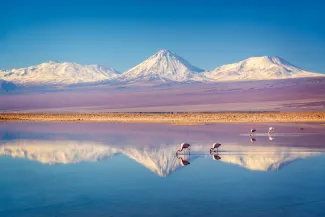
I'm standing outside Hostal Puritama at 5:30am, the kind of cold that makes your breath fog even in the desert, watching a beat-up minibus rattle up to collect eight of us for the El Tatio geysers. It's mid-April in San Pedro de Atacama, and the temperature has dropped to maybe 6°C overnight, but by noon it'll hit 22°C and I'll be peeling off layers while floating in Laguna Cejar. This is the thing about Chile in April that nobody tells you: while everyone else is booking their December trips and complaining about crowds, you get the entire country at its most cooperative.
April through early May sits in this peculiar sweet spot on Chile's tourism calendar, the weeks after summer chaos fades but before winter shuts down half the country. Prices drop 20 to 30 percent across the board. Torres del Paine permits that require six months' advance booking in January? Available with a few weeks' notice. The Atacama Desert sheds its brutal summer heat but keeps the crystalline skies. Patagonia's lenga forests turn the kind of golden-red that makes you understand why photographers obsess over this place.
I've crossed through Chile maybe seven times over the past decade, hitching between hostels and chasing the kind of travel that doesn't fit into two-week vacation windows. I've done Santiago in scorching February, got caught in Patagonian winter storms in July, spent a forgettable week in Valparaíso during June's grey drizzle. But April keeps pulling me back because it's the only month where you can reasonably hit Atacama, the Lake District, and Patagonia in one trip without either melting, freezing, or finding half the trails closed.
This guide covers the practical reality of stringing together Chile's three most dramatic regions during shoulder season: what the weather actually does to your plans, how domestic flights and ground transport work, where your money goes, and why April's timing matters more than you'd think when you're packing for three different climates in one backpack.
Quick Facts
- Best Time to Visit: April through early May for shoulder season advantages; weather stable, crowds minimal, prices reduced
- Currency: Chilean Peso (CLP); roughly 900-950 CLP to 1 USD as of early 2026; ATMs widely available, credit cards accepted in tourist areas
- Language: Spanish; English hit-or-miss outside Santiago, download offline translation app essential
- Getting There: International flights to Santiago (SCL), then domestic connections to Calama (Atacama), Puerto Montt (Lakes), or Punta Arenas (Patagonia)
- Visa Requirements: US, Canadian, EU, Australian citizens receive 90-day tourist visa on arrival; no advance visa needed
Understanding Chile's April Climate: Three Seasons in One Country
Chile stretches 4,300 kilometers north to south, spanning 38 degrees of latitude, which creates the geographic absurdity of experiencing three completely different seasons in what's technically one country's autumn. You need to grasp this before booking anything, because your packing list and itinerary timing depend entirely on understanding that April weather in San Pedro de Atacama has absolutely nothing to do with April weather in Torres del Paine.
The Atacama Desert sits near the Tropic of Capricorn at 2,400 meters elevation, which gives you bone-dry conditions year-round but with seasonal temperature swings. April delivers what I'd call ideal desert weather: daytime highs between 19 and 24°C, nighttime lows dropping to 6-10°C, virtually zero rainfall (maybe 3mm for the entire month), and eight hours of daily sunshine with UV index screaming up to 11. Summer here, December through February, pushes past 30°C with sun intense enough to burn through SPF 30 in under an hour. April keeps the clear skies without the punishment.
The Lake District around Pucón and Puerto Varas enters early autumn during April, with temperatures ranging from 12 to 18°C and the first leaf changes starting to paint the landscape. Puerto Varas specifically sees averages between 7°C overnight and 15°C during the day, with 8 to 15 rainy days throughout the month. This is shoulder season before winter closures hit in June, when mountain passes get sketchy and some accommodations shut down entirely. You're catching the region while everything's still accessible but the summer tour buses have cleared out.
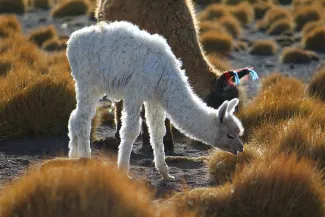
Patagonia, specifically Torres del Paine, hits late autumn in April with daily temperatures between 5 and 15°C, the lenga and ñirre forests showing off golden yellows and burnt reds, and wind speeds calming down from summer's relentless 60-80 km/h gusts. Snow becomes possible above 1,000 meters, especially late in the month, and overnight temperatures can drop below freezing at higher elevations. But compared to January's crowds and December's wind chaos, April gives you a version of Patagonia that feels almost approachable.
Why this matters for planning: you're packing a puffy jacket for freezing pre-dawn geyser tours and sub-zero Patagonian nights, a rain shell for Lake District drizzle, high SPF sunscreen for Atacama's UV assault, and layering pieces that work across all three. Your itinerary needs to account for these windows; Patagonia trails start limiting access or closing entirely by late April or early May, while Atacama stays consistent and the Lakes remain accessible through May. The practical advantage of April is that all three regions are both comfortable and open, which isn't true in winter (Patagonia shuts down) or summer (Atacama becomes genuinely unpleasant).
Getting There and Around: Flights, Domestic Routes, and Ground Transport
International flights land at Santiago's Arturo Merino Benítez Airport (SCL), and from there you're building a domestic triangle to reach the regions that matter. According to current Google Flights data, roundtrip flights from major US cities to Santiago average around $746, though deals from Miami can drop to $402-428 roundtrip if you're monitoring fares 3 to 26 weeks out. April sits in shoulder season for international routes too, so you're not fighting peak pricing.
The domestic network runs primarily through LATAM Airlines and Sky Airline, Chile's two main carriers connecting Santiago to regional hubs. For an Atacama-Lakes-Patagonia routing, you're looking at three key routes: Santiago to Calama (CJC), the gateway to San Pedro de Atacama, runs around $48-100 one-way in early April with frequent daily departures on both LATAM and Sky. Flight time is roughly 2.5 hours. Santiago to Puerto Montt (PMC), your Lake District entry point, starts at $47.80 one-way with multiple daily flights taking about 2 hours. Santiago to Punta Arenas (PUQ) for Patagonia access ranges from $42-67 one-way, with flights clocking 3.5 hours covering 1,371 miles.
LATAM tends to offer more flight frequencies and slightly better reliability (7.5 out of 10 user ratings), while Sky Airline often undercuts prices, especially on last-minute bookings. Both carriers operate under Chile's DGAC regulations (their FAA equivalent) and maintain solid safety records. For gear-heavy travelers, check baggage policies carefully; LATAM's basic economy fares often include one checked bag, while Sky charges extra. If you're hauling camping equipment for Torres del Paine, those fees add up fast.
Ground transport varies by region and shapes your itinerary more than you'd expect. In Atacama, everything tourist-related clusters in San Pedro de Atacama, a town you can walk end-to-end in 20 minutes. Buses from Calama airport to San Pedro run regularly (2 hours, about $10), and once you're based there, you're booking day tours that include transport. No rental car needed unless you're aggressively independent, and even then the distances and road conditions make tours more practical.
The Lake District absolutely benefits from a rental car. Puerto Varas, Pucón, Frutillar, Chiloé Island, the hot springs scattered through national parks, these places sit spread out enough that relying on buses kills your flexibility. Rental costs run $35-50 per day for a basic sedan, gas is expensive (roughly $1.20-1.40 per liter), but the freedom to chase weather and hit thermal baths on your own schedule justifies the cost. Roads are well-maintained, signage is decent, and you're not dealing with terrifying mountain passes if you stick to the main tourist circuit.
Patagonia and Torres del Paine require shuttle booking from Puerto Natales, the town that serves as base camp for the park. Bus Sur operates the primary service, running daily shuttles from Puerto Natales to Laguna Amarga entrance (112 km, 90-120 minutes) with departures at 6:45am, 7am, 7:15am, and noon, returning between 10:30am and 8:20pm. Cost is $15-20 USD one-way. You can book online, at the bus terminal, or through your hostel, and April's reduced visitor numbers mean last-minute availability is usually fine, though I'd book a few days ahead for reliability.
Sample routing for a multi-region trip: fly into Santiago, immediately connect to Calama, spend 3-4 days in Atacama, fly back to Santiago and down to Puerto Montt, rent a car for 5-7 days exploring the Lake District, return the car in Puerto Montt, fly to Punta Arenas, bus to Puerto Natales for Patagonia, then exit via Punta Arenas back to Santiago or home. You can also reverse this north-to-south, starting in Patagonia if you want to tackle the hardest region first. If you're extending into Argentina, the bus from Puerto Natales to El Calafate runs regularly in April before winter border closures complicate things.
Atacama Desert: Why April Is Actually Ideal
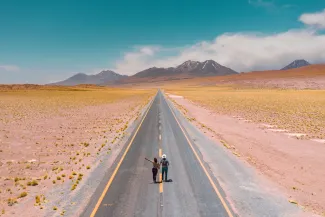
San Pedro de Atacama serves as your base, a dusty adobe town at 2,400 meters that's built its entire economy around tourists chasing desert landscapes and stargazing tours. The infrastructure is solid: dozens of hostels ranging from $20-40 per night for dorm beds, mid-range hotels at $80-120, tour operators lining Caracoles (the main street), restaurants, ATMs, small grocery stores for stocking snacks and water. Based on current accommodation data, budget hostels like Hostal Puritama start around $18-35 for dorms and $40-65 for private rooms, while mid-range spots like Hotel Pascual Atacama run $90-140 and include buffet breakfast and pool access.
April's weather advantage over summer is significant and under-discussed. December through February pushes daytime temperatures past 30°C with sun brutal enough that you're genuinely uncomfortable during midday hours. The UV index stays at 11-12, meaning you burn in minutes without serious protection. April drops you into the low 20s Celsius during the day, which is warm enough for hiking and exploring but doesn't force you to hide indoors between noon and 4pm. Nights get cold, down to 6°C or so, but that's what layers and your hostel bed are for. The clear skies stay consistent; April sees clear conditions about 94 percent of the time, same as summer.
Top experiences remain fully accessible in April, just with fewer people cluttering your photos. Valle de la Luna at sunset (around 7:19pm in mid-April) gives you those otherworldly rock formations and sand dunes turning orange and pink, and you'll share it with maybe 30 people instead of 200. El Tati geysers require a pre-dawn departure (4am pickup, 90-minute drive to 4,300 meters elevation) for sunrise viewing when the steam plumes are most dramatic. Bring serious layers; it's genuinely freezing up there in the dark, and altitude can trigger headaches if you're not acclimated. Laguna Cejar, the salt lake where you float effortlessly due to insane salinity, works beautifully on warm April afternoons. Piedras Rojas, the red rocks and turquoise lagoons tour, operates year-round and looks stunning under April's reliably blue skies.
Stargazing tours are non-negotiable if you're here, and April's clear skies make it prime season. Book with SPACE observatory or a similar operation; they run 2-3 hour evening programs with telescope viewing and expert guides explaining Southern Hemisphere constellations. Check the lunar calendar before booking; new moon windows offer the darkest skies. Tours cost $30-40 per person and often include hot chocolate and transportation from your hostel.
Crowd reality in April matters if you've ever dealt with overtouristed destinations. January peaks see maybe 2,500 daily visitors descending on San Pedro's 5,000 permanent residents. April drops that to 1,000 or fewer, which means you're not fighting for sunrise photo spots, restaurant tables open up without reservations, and the vibe shifts from chaotic backpacker party town to something more relaxed and manageable.
Packing for Atacama requires taking the climate extremes seriously. SPF 50+ sunscreen, reapplied every two hours. Quality sunglasses. Lip balm with sun protection. A puffy jacket or serious fleece for those 6°C nights and the El Tatio predawn excursion. Layers you can strip down during the day. A headlamp for stargazing tours and early departures. Your phone and camera battery drain faster at altitude, so bring backup power banks. Hydration is critical at 2,400 meters; drink more water than feels necessary.
Budget reality for a week in Atacama: tours run $30-80 per excursion depending on duration and destination, figure 3-4 tours over 4 days. Meals cost $12-20 for sit-down restaurants, less if you're hitting empanada stands and cooking breakfast at your hostel. Accommodation at $25-40 per night in dorms or budget doubles. Total for a week comes to $500-800 all-in for budget travelers, $900-1,200 if you're staying in nicer hotels and splurging on meals.
The Lake District: Autumn Colors and Volcano Views
The Lake District offers two main base towns with distinct personalities: Pucón, the adventure hub with a younger hostel crowd and Volcán Villarrica looming over everything, and Puerto Varas, the more relaxed lakeside town with German architecture and Osorno volcano views. Both work as bases for exploring the region; your choice depends on whether you want adrenaline activities or slower-paced scenic touring.
April's unique selling point here is the early autumn colors without winter's heavy rain or road closures that hit in June and July. The native forests around Parque Nacional Huerquehue start showing yellows and reds, especially the deciduous southern beech. You're catching the landscape in transition, which gives photographers that soft golden light and varied foliage that summer's uniform green doesn't offer. Weather stays mild, with Puerto Varas averaging 7-15°C and Pucón slightly warmer, but expect 8-15 rainy days through the month so a rain shell is non-negotiable.
Top activities remain open and accessible in April. Climbing Volcán Villarrica requires a guide (mandatory, around $120-150 per person for the full-day summit push) and depends on weather and volcanic activity, but April typically sees stable conditions. The climb is technical, requiring crampons and ice axe, but guides provide gear and expertise. Parque Nacional Huerquehue offers gentler hiking; the lakes trail (Sendero Los Lagos) gives you turquoise alpine lakes and araucaria forests in a 4-hour roundtrip hike that doesn't require guide or special gear. Termas Geométricas, the geometric hot springs pools carved into a forested canyon, charges about $35 entry and stays open year-round; soaking in 40°C water while surrounded by autumn forest is absurdly pleasant. Kayaking on Lago Llanquihue, Chile's second-largest lake, works in April if weather cooperates; rental shops in Puerto Varas rent by the hour.
What starts closing: some high-altitude trails and park sectors begin limiting access late April as snow accumulates and conditions become less predictable. Check current status with CONAF if you're planning ambitious mountain hikes. Main tourist attractions stay open through May.
Accommodation in Pucón skews toward hostels and adventure lodges, with dorm beds at $20-30 and private rooms at $50-80. Puerto Varas offers more boutique hotels and B&Bs at $90-140 per night, often with lake views and included breakfast. If you're splurging, lakeside cabañas (cabins) rent for $150-200 per night and give you full kitchens and private space, ideal for couples or small groups.
The rental car advantage becomes obvious once you're here. Hitting Termas Geométricas requires driving an hour east from Pucón on a decent gravel road; public transport doesn't reach it. The Ruta Escénica (Scenic Route) between Puerto Varas and Puerto Montt loops around Lago Llanquihue with volcano viewpoints and German colonial towns like Frutillar, best done at your own pace. Chiloé Island, two hours south of Puerto Montt, features wooden churches, penguin colonies, and distinct local culture; feasible as a long day trip or overnight with a car. Without one, you're limited to town-based activities and organized tours.
Food scene: Puerto Varas celebrates its German heritage with bakeries serving kuchen (fruit tarts) and strudel on every corner; Café Danes and Casa Valdes are local favorites. Pucón leans into craft beer and casual dining; try Fogón del Leñador for wood-fired meats. Seafood appears everywhere given the proximity to both Pacific coast and inland lakes; congrio (conger eel), merluza (hake), and locally farmed salmon dominate menus. Budget $12-20 per meal at sit-down restaurants, $6-10 for casual lunch spots.
Realistic timing for the Lake District: 4-5 days minimum to cover Pucón or Puerto Varas without rushing, 7 days if you're including both towns and Chiloé Island. April weather means you'll likely lose half a day to rain at some point, so build buffer into your plans.
Patagonia and Torres del Paine: Autumn's Grand Finale
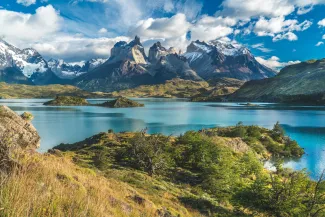
Torres del Paine National Park sits at the southern extreme of Chilean Patagonia, a granite massif and glacier-carved landscape that's become synonymous with serious hiking. April marks the tail end of trekking season before winter shuts most trails down, which creates this strange window where the park is both accessible and uncrowded in ways that December and January never allow.
Why April works: the W Trek, the park's signature 4-5 day hike, requires permits that max out at 50-100 people daily depending on trail section. In January those permits book out 6 months ahead. In April, you can often snag permits with 30-60 days' notice, sometimes less. Refugios (mountain huts with bunks and meals) that are impossible to book in summer sometimes have availability, though don't count on it. Wind speeds, which regularly hit 60-80 km/h in December, calm down somewhat in April, though "calmer" is relative; 30-40 km/h gusts are still normal.
The autumn payoff is visual. Lenga and ñirre forests turn golden-yellow and rust-orange, contrasting against the grey granite towers and turquoise lakes in ways that make summer's green seem flat. The light shifts too; lower sun angles in late autumn create dramatic shadows and golden-hour conditions that extend through midday. If you're shooting photography, April delivers.
Weather reality check: daytime temperatures range 5-15°C, dropping below freezing at night especially at higher elevations or in the backcountry. Snow is possible any time, particularly late April, and it can dump quickly enough to make trails impassable for a day. Wind remains significant; you're still dealing with Patagonian gusts that can knock you off balance if you're not braced. Pack accordingly: four-season tent if camping, sleeping bag rated to -5°C minimum, waterproof everything, layering system with insulated jacket, gloves, warm hat.
Booking Torres del Paine requires navigating CONAF's permit system. As of January 2026, all entry permits must be purchased through the official portal at pasesparques.cl. Select your entry date, trail sections (W Circuit or specific day hikes), and nationality; international visitors pay around $35 USD for high season (November-March), with April likely falling into a lower shoulder season rate though exact 2026 pricing should be confirmed on the portal. You'll receive a QR code confirmation; print it or save it offline since cell service and WiFi don't exist at Laguna Amarga entrance where you'll scan it on arrival.
Camping costs approximately 21,000 CLP per night (about $23 USD) at designated CONAF sites, paid separately when you book campsites. Refugios, when available, run $80-150 per night for a bunk, meals extra or included depending on the operation. Book refugios at least 30-60 days ahead even in April; operators like Vértice Patagonia and Fantástico Sur manage most of them and their availability can be checked online.
The W Trek takes 4-5 days covering roughly 80 kilometers, hiking between valleys and viewpoints named for their destinations: Valle Francés (French Valley), Glaciar Grey, Mirador Base Torres (the iconic three granite towers). You can go independently with camping gear or book refugio-to-refugio if you'd rather pay for a bed and meals. In April, trails remain open but services reduce; some refugios close early, and ranger presence decreases. Check CONAF's website for current status and any early winter closures.
Puerto Natales serves as your base town, sitting 112 kilometers south of the park. Budget hostels run $18-30 per night for dorms (Erratic Rock and Hostel Amerindia are longtime backpacker favorites), hotels $70-120. Grocery stores like Unimarc stock supplies for trekking; prices are higher than Santiago but reasonable. Book your shuttle to the park entrance through Bus Sur (details covered earlier), departing early morning and returning late afternoon or evening. Day hikes to Mirador Base Torres (8-10 hours roundtrip) or shorter trails to Lago Grey are feasible if you're not committing to the full W Trek.
Beyond the W, wildlife spotting is reliable in April. Guanacos (wild llama relatives) graze everywhere in herds of 10-50. Andean condors circle granite peaks, their 3-meter wingspans visible from kilometers away. Pumas inhabit the park but sightings are rare and require luck or a specialized tracking guide.
Real costs for Torres del Paine: doing the W Trek independently with camping gear runs $300-500 total (permits, camping fees, food, transport from Puerto Natales). Refugio-based trekking jumps to $800-1,200 depending on how many nights you book huts versus camping. Fully guided packages with meals, accommodation, and porters start at $1,500 and go up fast. Budget an extra $100-200 for Puerto Natales accommodation before and after the trek, meals in town, and any day-trip excursions.
Where to Eat: Regional Specialties Worth Seeking
Food in Chile's tourism zones ranges from backpacker-budget empanadas to regionally ambitious restaurants showcasing Patagonian lamb and local seafood. Knowing where to spend your meal budget matters when you're traveling long-term and watching costs.
In Atacama, Adobe restaurant in San Pedro stands out for its elevation beyond standard tourist fare; reservations are essential, and mains run $25-35 for dishes incorporating local ingredients like quinoa and llama. If that's too steep, the mercado artesanal (artisan market) sells empanadas and humitas (corn cakes) for $3-5, perfect for lunch between tours. Café Tierra does solid breakfast with coffee and pastries; grab supplies here before early morning departures.
The Lake District's German colonial influence shows up in every bakery. Puerto Varas delivers kuchen (fruit tarts, especially raspberry or plum) at Café Danes and Casa Valdes, which also serves excellent lake fish like trucha (trout) and pejerrey (silverside) at $18-25 for mains. Pucón's Fogón del Leñador specializes in wood-fired lamb and beef, popular with hikers restocking calories after volcano climbs; expect $25-35 for large meat plates. The craft beer scene in Pucón has exploded; try Cervecería Bundor or La Maga for local brews at $5-7 per pint.
Patagonia's specialty is Patagonian lamb and king crab (centolla). Afrigonia in Puerto Natales charges $30-40 for mains but the lamb is slow-roasted and the king crab comes from local waters, making it worth the splurge before or after a multi-day trek. Baguales Brewery offers the budget alternative with solid pub food and house-made beers at $12-18 per meal. Before heading into Torres del Paine, stock up at Unimarc grocery store; trekking food (pasta, rice, canned tuna, chocolate, instant coffee) is available and reasonably priced, though less so than Santiago.
Regional dishes to prioritize: pastel de choclo (corn and meat pie, similar to shepherd's pie but with sweet corn topping), curanto (traditional seafood and meat stew cooked in an earth oven, most authentic on Chiloé Island), centolla (king crab, served grilled or in casseroles), and pisco sour (Chile's national cocktail, grape brandy with lime juice and egg white, ubiquitous and dangerously drinkable).
Budget strategy for long-term travelers: shop at supermercados (Unimarc, Líder, Jumbo chains) for breakfast and lunch supplies, cook when hostels have kitchens (cocinas), save sit-down restaurant meals for regional specialties you can't replicate yourself. This keeps daily food costs around $20-30 instead of $50-70.
Practical Information: Permits, Packing, and Shoulder Season Reality
Permits and advance bookings separate destinations that require planning from those you can wing. Torres del Paine demands permits through pasesparques.cl booked weeks ahead (covered in detail earlier). Atacama tours book day-before or morning-of in April; I've never had an issue grabbing a Valle de la Luna sunset tour or stargazing session with 24 hours' notice in shoulder season. The Lake District operates mostly on walk-up access; national parks like Huerquehue charge entry fees (around $8-10) but don't require advance permits for standard trails.
Packing for three climates requires a layering system and accepting that your backpack will feel heavier than a single-region trip. Base layers (merino wool or synthetic), mid-layer fleece, insulated puffy jacket, waterproof rain shell; this combo handles Atacama's cold nights, Lake District rain, and Patagonian wind. Hiking boots must be broken in; blisters on day two of the W Trek will wreck your trip. Sun protection for Atacama means SPF 50+ sunscreen, sunglasses with UV protection, wide-brimmed hat or buff. Add a headlamp, reusable water bottle (3-liter capacity for long hikes), backup battery pack, and stuff sacks for organizing gear.
Money matters: ATMs exist in all major towns (San Pedro, Puerto Varas, Pucón, Puerto Natales) but charge foreign transaction fees of $5-8 per withdrawal; pull larger amounts to minimize fee frequency. Credit cards work at hotels, restaurants, and tour operators, though small vendors and refugios often require cash. Daily budget for mid-range travel runs $80-150 depending on accommodation choices and whether you're on a multi-day trek (camping drops costs) or staying in hotels (increases them). Budget backpackers can survive on $50-70 daily with hostel dorms, grocery store meals, and selective paid activities.
Language: Spanish fluency or at least basic competence makes this trip significantly easier. English is common in high-end hotels and some tour operators, but restaurants, bus terminals, grocery stores, and anyone outside the tourist infrastructure speaks Spanish exclusively. Download Google Translate offline for your lifeline. Learn essential phrases: "Cuánto cuesta?" (How much?), "Hay espacio?" (Is there space/availability?), "No entiendo" (I don't understand).
Safety and solo travel: Chile ranks as South America's safest country by most metrics, with significantly lower crime rates than neighbors. Solo female travel is common and generally safe; I've spent months traveling Chile alone and never felt particularly threatened. Hostel culture is strong, making it easy to meet other travelers for shared costs on rental cars or trekking partners. Hitchhiking is culturally accepted in Patagonia, especially around Puerto Natales and the park, though use standard judgment and avoid hitching alone at night.
Altitude considerations: San Pedro sits at 2,400 meters, high enough that some people feel mild altitude effects (headache, slight breathlessness, fatigue). Take it easy your first day, hydrate aggressively, avoid alcohol until you're acclimated. El Tatio geysers climb to 4,300 meters; if you're prone to altitude sickness, consider taking acetazolamide (Diamox) prophylactically or skipping this excursion. The rest of your trip stays below 1,500 meters so altitude becomes a non-issue.
What April means logistically: shoulder season reduces some high-season services. Tour operators may run fewer daily departures (one afternoon Valle de la Luna tour instead of three), but core offerings continue year-round. Book key experiences 1-2 weeks ahead to ensure availability, especially if traveling during Chilean holidays or long weekends when domestic tourists flood in. Flexibility helps; if weather socks in Torres del Paine for two days, having buffer time in your itinerary prevents missing the trek entirely.
Sample Itineraries: 10 Days to 3 Weeks
A 10-day express routing hits all three regions at a pace that feels hurried but accomplishes the main sights: Santiago 1 night (arrive, recover from international flight) → Calama/Atacama 3 nights (Valle de la Luna, geysers, stargazing, one buffer day) → fly to Puerto Montt, transfer to Puerto Varas 2 nights (Osorno views, town exploration, Chiloé day trip if ambitious) → fly to Punta Arenas, bus to Puerto Natales 3 nights (one day trip into Torres del Paine for Base Torres hike, or two shorter hikes if not doing full trek) → fly home from Punta Arenas. Budget breakdown: flights $400-600 domestic, accommodation $300-500 (mix hostels and mid-range), food $200-300, activities and transport $300-500. Total: $1,200-1,900 on the ground, plus international flights.
A 14-day balanced itinerary adds breathing room: Santiago 1 night → Atacama 4 nights → Puerto Varas 3 nights → add Pucón 3 nights for volcano climbing and Huerquehue hiking → Puerto Natales 5 nights to complete the W Trek with refugio nights and buffer for weather. This pacing lets you recover between regions and doesn't sacrifice sleep to catch 6am buses. Budget: $2,000-3,000 on the ground for budget-minded travelers, $3,500-5,000 for mid-range hotels and refugio W Trek bookings.
A 3-week comprehensive version includes everything at a pace that feels sustainable for long-term travelers: Santiago 2 nights → Atacama 5 nights → Puerto Montt/Puerto Varas 4 nights → Chiloé Island 2 nights → Pucón 4 nights → cross into Argentina for El Calafate 3 nights (Perito Moreno glacier, add this if you've got time) → back to Chile for Puerto Natales 6
About the Author

Mariana Torres
Mariana is a 33-year-old travel writer and backpacker who specializes in finding the pulse of a place far beyond the tourist maps.