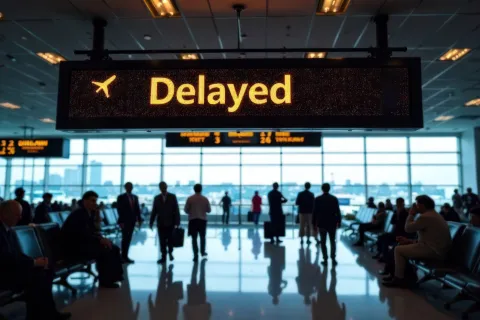
ROME, Italy - If you've got a European itinerary locked in for mid-June, you might want to check it twice. Italy just announced a fresh round of transport strikes that will hit flights, trains, and city transit across the country; and it's not alone. Multiple European nations are seeing overlapping walkouts that threaten to turn the early summer travel season into a logistical puzzle.
According to InTrieste, travelers and commuters across Italy are expected to face significant disruptions in June due to a series of transport strikes affecting air travel, rail services, and local public transport networks. Italy has scheduled a nationwide 24-hour general strike impacting public and private sectors from 21:00 on June 19 to 21:00 on June 20, hitting rail, local transit, and other essential services hard. A separate four-hour airport staff strike, called by the CUB Trasporti union, is set for Friday, June 13, running from 13:00 to 17:00 and likely to snarl flight schedules and ground operations. And that's before you factor in a national railway strike on June 9, which is expected to cause significant delays and cancellations across the country.
Not Just Italy: A Continent-Wide Headache
Italy isn't the only country dealing with labor unrest right now. Mid-June is shaping up to be a remarkably difficult window for travelers trying to move across Europe. The Netherlands, Portugal, Belgium, the UK, Spain, and France are all facing planned transport strikes of their own, each driven by local disputes over wages, working conditions, and the lingering cost-of-living pressures left over from the pandemic. The result is a patchwork of disruptions that could affect not just domestic journeys but cross-border connections; if your high-speed train from Paris to Milan gets delayed or cancelled on a strike day, your carefully timed onward flights or hotel reservations suddenly become a gamble.
The timing couldn't be worse. June marks the start of peak summer season in Europe, when tourism ramps up, families book long-planned vacations, and city infrastructure is already under stress. Now layer on strikes that can ground flights, thin out train schedules, and shut down metro and bus networks, and you've got a recipe for crowded platforms, rebooked itineraries, and a lot of frustrated travelers stuck in airport lounges or train station cafes.
How Italy's Strike Rules Actually Work
If this sounds like total chaos, it's worth understanding how Italian strikes are actually regulated. Unlike some labor actions that can shut down an entire system without warning, transport strikes in Italy are treated as essential public services, which means unions must give advance notice and operators must provide guaranteed minimum services, especially during commuter rush hours.
According to guidance from ItaliaRail, on days when strikes are held, Trenitalia guarantees minimum transport services; there are some trains that will run every day despite a strike so that an entire country doesn't shut down. Those guaranteed services are concentrated in two daily windows: 06:00 to 09:00 and 18:00 to 21:00 Monday through Saturday during strikes. That legal framework means you won't see a complete standstill, but you will see reduced frequency, packed trains, and widespread delays outside those protected time bands.
As one Italy travel advisory blog points out, strikes in Italy are common and could definitely affect your trip, but they are conveniently publicized a few weeks or months ahead of time so that you can work around them. That advance notice is a double-edged sword; it gives you time to adjust, but it also means you need to stay vigilant and check official strike calendars, especially if you're traveling between cities or catching flights that depend on regional rail or metro connections.
The June Calendar Is Packed
Italy's June strike calendar is layered with actions across multiple modes and regions. The June 9 national railway strike is expected to affect services throughout the day; the June 13 airport staff walkout from 13:00 to 17:00 hits the busiest travel hours of the afternoon; and the 24-hour general strike from June 19 evening to June 20 evening sweeps across public and private sectors, meaning rail, local buses, and metro lines in cities from Rome to Milan, Naples to Turin, could all be running skeleton schedules or facing complete stoppages outside the guaranteed service windows.
And it's not just national actions. Regional strikes in early June in Sicily, Emilia-Romagna, and Puglia show how local transit disputes can compound the effect of national walkouts, especially for travelers who need to connect flights with trains or buses to reach smaller towns or coastal resorts. A four-hour local transport strike in Messina or Catania might not make international headlines, but if you're trying to get from Catania airport to your cruise port or mountain hotel, it's a very real problem.
Planning Around the Disruption
So what should travelers do? First, check the official strike calendars for Italy and any other European country on your itinerary as soon as you have firm dates. Union announcements and transport operator websites will list guaranteed service times, affected lines, and any pre-emptive cancellations. Airlines and rail companies often allow free rebooking or refunds for travel on strike days, but you need to act early; waiting until the morning of a strike to sort out alternatives is a recipe for sold-out flights and no-show hotel penalties.
Second, build buffer time into your itinerary, especially if you have tight connections. If you're flying out of Rome or Milan on a strike day, get to the airport earlier than usual and assume ground transport will be slower and more crowded. If you're taking a long-distance train, book one of the guaranteed peak-hour services if possible, or consider traveling a day earlier or later to avoid the disruption entirely.
Third, have backup plans. If your regional train gets cancelled, is there a private bus service or ride-share option? If your city metro shuts down, can you walk or take a taxi to your next destination? Mid-June strikes are predictable enough that a little advance research can save hours of stress on the day.
Is This the New Normal?
The bigger question is whether Europe's recurring transport strikes are becoming a structural feature of the post-pandemic, high-inflation labor landscape rather than isolated disputes. Workers across the continent are pushing back against wage freezes, understaffing, and service cuts, and governments and operators are balancing the right to strike with the need to keep essential services running. For travelers, that means strikes are no longer rare outliers; they're regular events that need to be factored into any European trip, especially during high-season months like June, July, and September when labor leverage is highest.
From a practical standpoint, that shifts the booking calculus. Flexibility is now a premium feature, not a nice-to-have. Travel insurance that covers strike-related delays and cancellations is worth considering if your trip involves multiple countries or tight timelines. And staying informed; checking news, union websites, and official transport operator feeds; is no longer optional if you want to avoid getting stranded or missing a key connection.
Mid-June in Europe is still beautiful, and most trips will go off without a hitch. But this year, a little extra planning and a lot of patience will go a long way.
More travel news
Uber Boats Transform European Island Travel
EUROPEAN COAST - Uber expands its mobility platform to coastal waters, bringing app-based boat booking to island destinations across Europe.

Europe Launches One-Ticket System for Cross-Border Trains
BRUSSELS, Belgium - The European Commission has unveiled a legislative proposal to enable single-ticket booking for multi-operator, cross-border rail journeys across Europe, though the system remains years away from reality.
British Tourist Quarantined in Milan After Hantavirus Exposure
Milan, Italy - A 20-year-old British tourist has been placed in extended quarantine at Milan's Sacco Hospital after contact with a woman who died from Hantavirus, despite testing negative for the virus.

Luxury Watches Make Travelers Targets for Knife Attacks
LONDON, England — Wearing a high-end timepiece in major tourist destinations now carries significant risk of violent robbery, as organized crime groups treat luxury watches as portable cash.

About the Author

Bob Vidra
Bob Vidra, based in scenic Tahoe, is an esteemed tech editor known for his deep understanding of the dynamic intersection of technology, travel, and the outdoors.