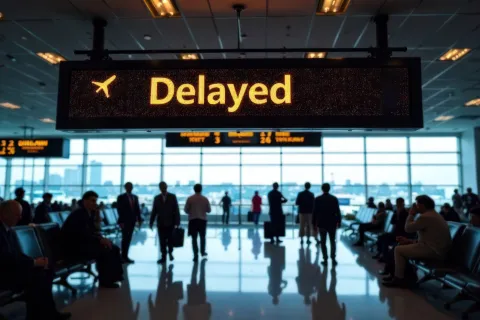
Mideast Conflict Threatens Long-Term Aviation Disruption Beyond Diplomatic Resolution
Global — The aviation sector is facing compounding pressures as the monthlong war in the Middle East pushes fuel costs higher and raises the specter of prolonged operational risks tied to one of the world's most critical maritime chokepoints. During a client webinar hosted by Osprey Flight Solutions, Chief Intelligence Officer Mathew Borie warned that the effective closure of the Strait of Hormuz could outlast any near-term political settlement, according to Airlines EIN News. This is not abstract geopolitical theater. The Strait of Hormuz is a 21-mile-wide passage through which roughly one-fifth of global oil supply flows. When it narrows or closes, fuel prices spike, refining timelines stretch, and airlines operating on razor-thin margins absorb the hit. For travelers, that translates to higher ticket prices, reduced route frequency, and increased uncertainty around long-haul itineraries touching the Gulf, South Asia, or Eastern Africa.What Sparked the Crisis
The conflict ignited following US and Israeli attacks against Iran, according to Airlines EIN News. While the political dimensions remain fluid, the practical fallout for aviation is already measurable. Fuel costs are rising as regional tensions disrupt supply chains and force tankers to reroute around the Persian Gulf. Airlines with substantial exposure to Gulf hubs or trans-Asian routing are absorbing incremental costs daily. Borie's warning during the Osprey webinar underscores a harder truth: even if diplomats broker a ceasefire, the operational damage to maritime fuel transit and regional airspace stability could persist for months. Infrastructure doesn't snap back the moment a peace agreement is signed. Insurers recalibrate risk. Tanker operators renegotiate routes. Airlines adjust schedules around airspace that may remain volatile or contested.Why the Strait of Hormuz Matters to Travelers
For anyone flying between Europe and Asia, through the Gulf region, or onward to the Indian subcontinent, the Strait of Hormuz is invisible but essential. Its closure or effective restriction forces airlines to either absorb higher fuel costs from alternative supply routes or pass those costs directly to passengers. In some cases, it forces route changes that add flight time, require additional fuel stops, or scrub marginal routes entirely. Business travelers on Gulf carrier networks, Dubai, Doha, and Abu Dhabi in particular, should anticipate potential schedule volatility. Leisure travelers booking long-haul itineraries with connections through the region face similar uncertainty. While major carriers maintain contingency planning for geopolitical disruption, those contingencies are finite. Prolonged instability erodes flexibility.Fuel Cost Pressures Compound Existing Airline Strain
The timing is particularly brutal. Airlines are still managing post-pandemic debt loads, labor cost inflation, and uneven demand recovery across regional markets. Fuel represents one of the largest variable cost inputs for any carrier. When crude prices climb due to supply disruption rather than demand growth, airlines can't easily hedge or pass costs along without dampening bookings. According to Airlines EIN News, the costs and consequences for aviation of the Mideast war are becoming more acute by the day. That phrasing is deliberate. This is not a static situation. Each week the conflict drags on, the financial strain deepens. Smaller carriers with limited cash reserves face existential pressure. Larger network carriers trim capacity, defer new routes, or pull back on frequency in markets where yields are already thin.What This Means for Route Planning and Pricing
Travelers should expect incremental fare increases on routes with Middle Eastern exposure, particularly those operated by Gulf carriers or requiring overfly rights through contested airspace. Some routes may disappear temporarily or permanently if fuel economics no longer support them. Others may shift to less direct routings that add block time and reduce schedule attractiveness. For those with flexible travel dates or route options, consider alternatives that avoid Gulf hubs or Persian Gulf airspace entirely. European carriers with direct routes to South and Southeast Asia via Central Asian or Russian corridors may offer more stable pricing and schedule reliability in the near term, though geopolitical factors in those regions carry their own complexities.Prolonged Risk Even After Ceasefire
Borie's emphasis on the potential for long-lasting impacts after a political solution is the critical takeaway here. Travelers and travel planners often assume that once a conflict formally ends, normal operations resume quickly. That is rarely the case in regions where infrastructure has been stressed, insurance premiums have spiked, and regulatory frameworks have shifted in response to security threats. Airlines will need time to rebuild confidence in airspace safety, renegotiate fuel supply agreements, and adjust route economics to reflect new cost baselines. Airports and air traffic control systems in conflict-adjacent regions may require technical assessments before resuming full capacity. Even after diplomats shake hands, the operational reset takes months, not days.Practical Guidance for Travelers
Monitor fare trends on routes touching the Gulf or requiring Persian Gulf overfly rights. Book refundable tickets or those with flexible change policies if travel dates fall within the next 90 to 180 days. Avoid tight connections through Gulf hubs where schedule disruptions could cascade. Consider travel insurance that explicitly covers geopolitical disruption, though read the fine print; many policies exclude war-related impacts. For business travelers with non-negotiable itineraries, build in buffer time and have backup routing options identified before departure. Communicate with corporate travel managers about risk thresholds and decision points for route changes or cancellations. This is the kind of scenario where real-world conditions override marketing optimism. The Mideast war is not a distant headline. It is reshaping fuel markets, airline economics, and travel reliability in ways that will outlast the conflict itself.More travel news
US Warns Citizens to Reconsider Travel to 14 Mideast Nations
Washington, D.C. - The U.S. State Department has reissued security alerts for 14 Middle Eastern countries, warning Americans of rapidly shifting threats and urging caution across the region.

Budget Airlines Slash 900 Flights Amid Fuel Crisis
Seoul, South Korea - Surging jet fuel costs from the Middle East conflict force Korea's low-cost airlines to cancel hundreds of international routes and implement crew furloughs through June.
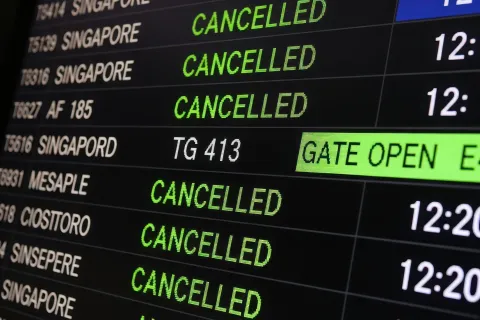
Panama Canal Fees Hit $4M as Iran Conflict Reroutes Ships
PANAMA CITY, Panama - The Iran war's closure of the Strait of Hormuz has triggered bidding wars for Panama Canal slots, with last-minute auction prices soaring to $4 million per vessel.

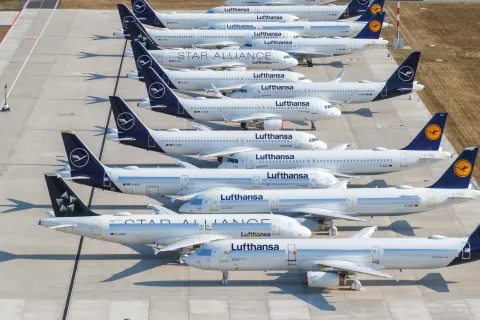
Lufthansa Grounds CityLine as Fuel Crisis Bites
FRANKFURT, Germany – Lufthansa scraps 2,000 summer flights and closes its regional CityLine subsidiary a year early as fuel prices double, joining a wave of airlines trimming schedules.
About the Author

Jeff Colhoun
Jeff Colhoun is an acclaimed travel writer, photographer, and filmmaker, whose work is respected both in the United States and internationally.