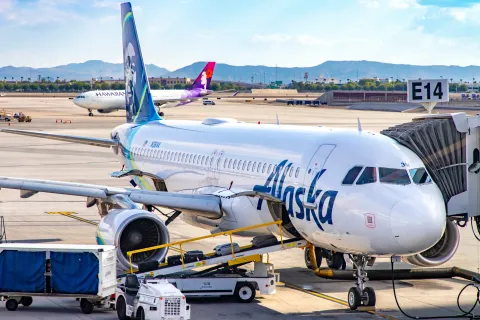
JAKARTA, Indonesia - If you've been watching flight tracker apps obsessively this week, wondering why half of Southeast Asia's routes are suddenly painting red, you're not alone. A significant wave of operational disruptions has swept through Indonesia, Malaysia, and Hong Kong, with more than 200 flight cancellations recorded across carriers including Garuda Indonesia, AirAsia, Malaysia Airlines, Lion Air, and Batik Air, according to Travel And Tour World.
The cancellations affected both domestic and international routes, leaving travelers stranded at major hubs from Jakarta to Kuala Lumpur to Hong Kong. This isn't a single weather event or isolated technical glitch; it's regional operational strain playing out across multiple days and multiple airlines, the kind of slow-burn chaos that makes rebooking a full-time job.
What Got Canceled and Where
The disruption hit airports across western Indonesia, Malaysia, and Hong Kong, with routes spanning everything from short regional hops to long-haul international connections. According to Travel And Tour World, the affected network included flights to and from London, Jakarta, Surabaya, Dhaka, and Naha, suggesting both low-cost carriers and full-service airlines took a hit.
The scale of the disruption points to something broader than single-carrier issues. When you see cancellations stacking up across multiple airlines in multiple countries, it usually means airport capacity problems, air traffic control constraints, or fleetwide maintenance backlogs coming due all at once. For travelers stuck in the middle, the reason matters less than the reality: you're sleeping in an airport lounge or frantically hunting alternate routes.
The Aircraft at the Center
Travel And Tour World reported heavy reliance on Airbus A320 and Boeing 737 aircraft across the affected airlines, the workhorses of regional and domestic travel in Southeast Asia. These are the planes that run high-frequency routes between Jakarta and Bali, Kuala Lumpur and Kota Kinabalu, Hong Kong and everywhere. When something disrupts that backbone, whether it's maintenance scheduling, crew shortages, or slot congestion, the ripple effects hit hard and fast.
For budget travelers and digital nomads who've built entire itineraries around cheap, frequent connections on these routes, the cancellations are more than an inconvenience. They're a reminder that the low-cost carrier model depends on tight turnarounds and slim margins. When the system gets stressed, there's very little buffer.
The Rebooking Reality Check
Here's what 200-plus cancellations actually look like on the ground: packed customer service desks, overbooked alternate flights, and travelers trying to decide whether to wait it out or burn cash on last-minute rebookings with different carriers. If you're on a tight budget or visa timeline, these disruptions can derail weeks of planning.
And unlike a canceled flight in Europe or North America, where passenger rights regulations sometimes force airlines to cover meals and hotels, Southeast Asia's regulatory landscape is patchier. You might get rebooked; you might get a voucher. You probably won't get compensation unless you're on a route covered by stronger consumer protections.
For solo travelers especially, the lack of a safety net becomes real fast. You're suddenly juggling hostel cancellations, scrambling for backup routes through unfamiliar hubs, and trying to figure out if that third-party booking site you used will actually help or just pass you between chat bots. It's the kind of travel chaos that teaches you to always, always have a Plan B and a credit card with room on it.
What Caused This Mess?
The details behind the operational strain remain frustratingly vague, but the pattern is consistent: disruptions spanning multiple days, broad network impact, and heavy reliance on narrow-body fleets stretched thin across high-frequency routes. Travel And Tour World noted the strain affected operations across western Indonesia, Malaysia, and Hong Kong, which suggests either regional air traffic control issues, overlapping maintenance schedules, or weather patterns compounding existing vulnerabilities.
What's clear is that this wasn't a one-off event. When cancellations stretch across multiple carriers and multiple countries over several days, it signals systemic pressure, not isolated incidents. And for travelers trying to move through the region, that means uncertainty lingers even after your specific flight gets reinstated.
Should You Rethink That Regional Itinerary?
This disruption is a gut check for anyone planning multi-stop trips through Southeast Asia in the coming months. The region's budget carrier networks offer incredible value and connectivity, but they also operate on thin margins with limited redundancy. When things go sideways, your $30 flight to Bali can turn into a $300 scramble for alternatives.
If you're booking travel through Indonesia, Malaysia, or Hong Kong, build in buffer days between connections, especially if you're catching an international flight home. Don't assume same-day connections will hold, even on the same airline. And consider travel insurance that actually covers missed connections and rebooking costs, not just medical emergencies.
For digital nomads banking on cheap, frequent flights to hopscotch between coworking cities, this is also a reminder that flexibility cuts both ways. Yes, you can move around cheaply and often. But you also need financial cushion and schedule slack for when the system hiccups. That side hustle fund isn't just for slow client months; it's for when your $40 flight gets canceled and the next available seat costs five times as much.
The other practical takeaway: diversify your booking sources. If you're only flying one carrier because of loyalty points or route monopolies, you're vulnerable when that carrier hits operational trouble. Sometimes paying a bit more for a competitor's flight, or booking segments separately instead of one multi-leg ticket, gives you options when cancellations cascade.
Southeast Asia's aviation network has become essential infrastructure for a generation of long-term travelers, and disruptions like this expose how fragile that infrastructure can be under strain. The same efficiency that makes $50 international flights possible also means there's very little slack in the system when things go wrong. Plan accordingly.
About the Author

Mariana Torres
Mariana is a 33-year-old travel writer and backpacker who specializes in finding the pulse of a place far beyond the tourist maps.