Stay current with our airline news coverage.
The Scale and Sequence of the May 27-28 Storm Event
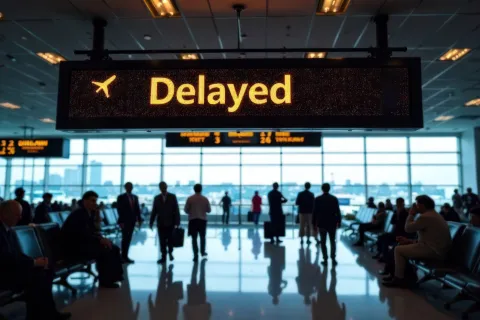
The FAA's decision to halt departures at Denver International Airport came as thunderstorms brought lightning and gusty winds to the region, conditions that make it unsafe to operate aircraft on exposed ramps or land in rapidly changing visibility. Travel and Tour World reported that the disruption led to at least one cancellation alongside the more than 400 delays, a figure that captures only the direct impact; connecting flights, missed boarding windows, and next-day crew constraints amplified the chaos. With average delays of 46 minutes, travelers faced long tarmac waits, compressed connection times, and the very real risk of missing onward flights. Those delays were not evenly distributed; some passengers departed nearly on schedule once the ground stop lifted, while others endured hours-long waits as airlines worked to resequence departures and manage congested gates. For tourists with non-refundable lodging reservations in mountain towns or timed entry permits for parks, even a one-hour delay can unravel an entire itinerary. The FAA ground stop itself is a blunt but necessary tool. When convective storms reduce airport capacity, controllers use ground stops and delay programs to prevent airborne holding and ensure that aircraft do not arrive faster than the airport can safely accommodate them. According to FAA planning products for late May 2026, a ground stop or delay program was possible after 1800 local time at Denver, tied to expected weather-related capacity reductions. That forecast proved prescient; the storms materialized exactly when afternoon and evening departure banks were at their busiest, maximizing the number of flights caught in the disruption.Why Denver Is Uniquely Vulnerable During Storm Season
Denver International Airport is among the most disruption-prone major U.S. hubs during thunderstorm season, a function of its high-plains location and exposure to fast-developing convective storms. Late May sits at the heart of Colorado's severe thunderstorm season along the Front Range, when warm, moist air colliding with the terrain regularly spawns large hail, strong winds, and heavy rain. The airport's open layout and distance from natural shelter mean that even relatively brief storms can force ground crews to suspend operations and send aircraft into holding patterns. Travel and Tour World noted that weather remains the leading cause of flight disruptions in 2026, and the May 27-28 event is a textbook example. A single high-impact weather day at Denver can affect well over 1,500 scheduled flights, so significant thunderstorms during afternoon and evening peaks cascade into missed connections and next-day disruptions systemwide. Because Denver is a major hub for multiple airlines, including low-cost carriers, weather-driven ground stops disproportionately affect tourists using the city as a gateway to the Rockies and other Western destinations. The storms brought numerous thunderstorms, lightning and gusty winds to the Denver area, creating conditions that lingered long enough to disrupt two consecutive days of operations. Even when the formal ground stop window is relatively short, on the order of an hour or two, catching a bank of arrivals and departures can generate knock-on delays that stretch into the night and following morning. For travelers, this means that a storm on Tuesday afternoon can still cause chaos on Wednesday as airlines reposition crews and aircraft.How Families and Tourists Should Prepare
Given Colorado's predictable storm season and Denver's role as a Western hub, families and multi-generational groups traveling through DIA in late spring need to build contingency time into their plans. That means booking the earliest feasible connection if you have an onward flight, purchasing travel insurance that covers weather delays, and carrying essential medications, chargers, and a change of clothes in your carry-on in case you end up spending an unexpected night in Denver. If you are flying into Denver en route to a mountain destination with a rental car pickup or lodging check-in deadline, communicate your inbound flight details to your hosts and consider booking flexible cancellation policies. The 46-minute average delay reported by Travel and Tour World may sound manageable, but delays are not uniformly distributed; some travelers will see minimal impact, while others face multi-hour waits or rebooking onto the next day's flights. For senior travelers and those with accessibility needs, weather disruptions at a large hub like Denver can be especially taxing. Long waits in crowded gate areas, uncertainty about meal vouchers or hotel accommodations, and the physical demands of navigating rebooking lines all compound the stress. If you are traveling with elderly relatives or anyone who requires predictable schedules and accessible facilities, consider flying a day early or choosing a less storm-prone routing if your schedule permits. It is also worth noting that the FAA's daily Air Traffic Report advised for late May 2026 that low clouds and low visibility may delay flights in Denver, language that signals ongoing weather-related constraints at the airport. When you see such advisories, treat them as advance warning; if your travel dates coincide with forecast storm activity, proactive rebooking or schedule changes before you leave home can save hours of frustration at the airport.Are Ground Stops Becoming More Common?
The May 27-28 thunderstorms fit a broader pattern of severe weather disruptions that travelers are seeing more frequently across the U.S. system. Whether increasingly volatile late-spring storm patterns along the Front Range are leading to more frequent or more severe air-travel disruptions at Denver and other Western hubs is a question worth watching. What is clear from this event is that when a major hub goes offline, even briefly, the national network feels it. From a family travel perspective, the practical takeaway is straightforward: assume late-May travel through Denver will carry weather risk, plan accordingly, and do not book tight connections or irreplaceable experiences on the same day you fly. Colorado's mountain scenery and world-class resorts are worth the trip, but getting there smoothly requires respecting the region's climatic realities and giving yourself enough buffer to absorb a storm-driven delay without losing an entire vacation day.More travel news
Alaska Airlines Hit With Fine for Boarding Drunk Flyers
SEATTLE — Alaska Airlines faces a proposed $165,000 FAA fine for allegedly allowing visibly intoxicated passengers to board 11 flights between February 2024 and February 2025.
FAA Ends Airline Shutdown Flight Cut Inquiry
CHICAGO - An FAA emergency order slashed flights at O'Hare and 39 other major airports in November 2025 during a government shutdown, citing air traffic controller shortages before lifting the cuts days later.

FAA Solves Shortage by Lowering Staffing Goals
WASHINGTON - The FAA has cut its national air traffic controller staffing target by roughly 2,000 positions, addressing a persistent shortage by changing the definition of success.

Frontier Offers Free Perks for Spirit Flyers in Need
DENVER, Colorado - Frontier Airlines rolls out new bonus miles and free Discount Den enrollment to support stranded Spirit passengers and reward loyal flyers amid the ULCC market shakeup.

About the Author

Jennifer Wilmington
Jennifer Wilmington is a distinctive voice in the world of family and luxury travel, offering unique perspectives derived from her diverse background and experiences.