Stay current with our airline news coverage.
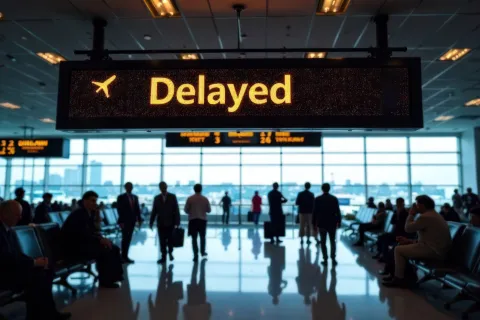
ATLANTA — When it rains, it pours. Or in Delta's case this weekend, when a technical glitch hits, a Nor'easter decides to pile on. Delta Air Lines passengers faced a perfect storm of frustration Sunday as the carrier battled a connectivity issue that hobbled its check-in and boarding systems just as one of the season's most powerful winter storms battered the East Coast. The timing couldn't have been worse; gate agents and check-in kiosks already dealing with weather chaos suddenly found themselves forced to process passengers the old-fashioned way, manually.
What Happened to Delta's Systems?
According to Delta, a connectivity issue affected the tools gate agents rely on to check passengers in and board flights. That might sound minor, but anyone who's watched a gate agent frantically type into a computer while a line of anxious travelers snakes through the terminal knows these systems are the backbone of modern airline operations. When they go down, everything slows to a crawl. And Sunday, that's exactly what happened. The airline acknowledged the technical slowdown forced airport staff to revert to manual processing, a significantly slower procedure compared with the automated boarding systems travelers have come to expect. In a statement, Delta confirmed the glitch contributed to widespread delays across its network, though the full extent of the disruption painted a pretty grim picture.
The Numbers Tell the Story
At one point Sunday, approximately 32% of Delta's mainline and regional flights were delayed. That's nearly one in three flights sitting on the ground or circling overhead when they should have been on schedule. The breakdown gets more specific: nearly 1,100 Delta mainline flights ran late, along with an additional 236 flights operated by regional partner Endeavor. For a major carrier like Delta, those aren't just statistics; they're thousands of missed connections, late arrivals, and frazzled travelers trying to salvage weekend plans or get home for the work week. And here's the kicker: this wasn't happening in isolation. The technical glitch hit right as airports along the I-95 corridor were already grappling with weather-related operational slowdowns. The Nor'easter brought heavy snow, strong winds, and blizzard conditions to several states, turning busy East Coast hubs into barely functional snow-covered parking lots.
When Technology Meets Mother Nature
There's something almost cruelly ironic about a technical failure coinciding with a weather disaster. Either one alone would test any airline's resilience; together, they create a cascading series of headaches that ripple through the entire network. Gate agents accustomed to scanning boarding passes and watching systems automatically update seat assignments suddenly had to handwrite tickets, manually verify standby lists, and communicate changes through slower channels. It's doable, sure, but when you're already short-staffed because half your team can't make it through a blizzard to work? Not ideal. Passengers stuck in terminals probably didn't care much about the technical nuances. Delayed is delayed, whether it's because a storm grounded your plane or because the computer system deciding who gets on board decided to take an unscheduled nap.
What This Means for Travelers
If you were flying Delta Sunday, you likely already know the answer: patience became the most valuable commodity in the airport. Manual processing takes time, and when you multiply that across hundreds of flights at dozens of airports, delays compound quickly. The good news, if you can call it that, is technical glitches tend to get resolved faster than Nor'easters. Delta's IT teams were likely working overtime to restore full connectivity, and modern airline systems usually bounce back within hours rather than days. Weather, on the other hand, doesn't care about your recovery timeline. For travelers impacted by the double whammy, the usual advice applies: check your flight status obsessively, have the airline's app downloaded and notifications turned on, and maybe pack a phone charger and some snacks. When things go sideways, being prepared makes the waiting game a little less painful.
The Bigger Picture
This incident highlights just how dependent airlines have become on technology. Automated check-in kiosks, mobile boarding passes, real-time system updates; they've made air travel faster and more efficient, but they've also created single points of failure. When those systems hiccup, even briefly, the ripple effects touch thousands of passengers. Combined with unpredictable weather that can shut down entire regions, it's a reminder that flying, for all its modern conveniences, still involves navigating a complex web of moving parts. Sometimes those parts don't all move in the same direction at the same time. Delta passengers who made it through Sunday's chaos probably aren't eager to relive the experience anytime soon. Here's hoping the airline's systems stay stable and the weather cooperates a little better in the weeks ahead.
More travel news
Major US Airlines Ground Nearly 1500 Flights June 3
NEW YORK, N.Y. - Widespread disruptions across Texas, Illinois, California, Massachusetts, New Jersey, and New York grounded 142 flights and delayed 1,294 on June 3, 2026, stranding travelers on major carriers.

Airlines Admit Dynamic Pricing Drives Up Ticket Costs
Airlines defend pricing practices as demand-driven inventory management, not personal data tracking, as April 2026 clarification settles long-standing passenger suspicion.
Airlines Slash First Class to $26 and Kill Status Perks
ATLANTA, Ga. - Delta and competitors are slashing first-class upgrade prices to $26, shrinking elite member upgrade inventory from 90% to just 12% over two decades.

Delta's 20-Year Reign Ends as United Claims the Crown
ATLANTA - After two decades building America's most successful airline, Delta finds itself vulnerable as quality slips and United closes in on the premium travel crown.
About the Author

Bob Vidra
Bob Vidra, based in scenic Tahoe, is an esteemed tech editor known for his deep understanding of the dynamic intersection of technology, travel, and the outdoors.