Stay current with our airline news coverage.
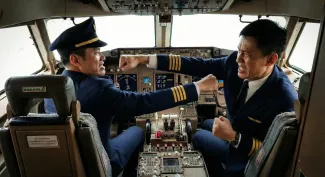
LOS ANGELES — Here's a sentence I never thought I'd write: An EVA Air captain is accused of punching his first officer multiple times while taxiing at Los Angeles International Airport. And no, this wasn't road rage on the tarmac; it allegedly happened inside the cockpit, in front of passengers preparing for a flight to Taipei. The incident unfolded earlier this month when a Malaysian first officer on a Boeing 777-300ER noticed the aircraft was taxiing faster than the 30-knot (roughly 55.6 kph) speed limit. According to reports from Taiwan's Reporter outlet, the first officer did exactly what you'd expect a trained professional to do: he alerted the Taiwanese captain multiple times. When those warnings went unanswered, he took matters into his own hands and manually applied the brakes, following standard operating procedure. The captain, identified by the surname Wen, apparently didn't appreciate the intervention. What happened next sounds more like a bar fight than a cockpit disagreement.
When Cockpit Resource Management Goes Off the Rails
"After alerting the pilot several times without response, the first officer manually applied the brakes in accordance with standard operating procedure," according to the initial reports. "The pilot, however, took offense at the intervention, and punched the first officer at least four times." Yes, you read that right. At least four punches. The first officer's hand reportedly swelled and bruised from the assault. And all of this allegedly took place while the plane was still on the ground at LAX, presumably with passengers settled in for what they thought would be a routine transpacific flight. Here's where it gets even more troubling. A whistleblower later came forward expressing serious concerns about how the airline handled the incident. "A whistleblower said they were disappointed that an emergency response plan was not immediately activated, and that a pilot exhibiting emotionally unstable behavior was allowed to continue the flight, potentially putting passengers' safety at risk," the reports indicated. Let that sink in for a moment. The captain allegedly assaulted a crew member in the cockpit, and the flight continued as planned. No emergency protocols, no crew swap, no immediate grounding. Just business as usual, apparently, for a 13-hour flight across the Pacific.
Conflicting Data Adds Another Layer
Now, EVA Air's version of events introduces an interesting wrinkle. The airline's quick access recorder data—essentially the aircraft's flight data monitoring system—reportedly showed the plane was actually complying with speed regulations during taxiing. So either the first officer was overly cautious, the data doesn't tell the whole story, or there's a discrepancy worth investigating. Whatever the technical truth about the speed, nothing justifies physical violence in a cockpit. Modern aviation is built on something called Cockpit Resource Management, which emphasizes clear communication, mutual respect, and the ability of junior crew members to speak up about safety concerns without fear of retaliation. This incident, if the allegations prove accurate, represents a spectacular failure of those principles.
EVA Air and Regulators Respond
To its credit, EVA Air suspended Captain Wen and referred the case to its disciplinary review board. The airline released a statement saying, "EVA Air has always attached great importance to flight safety, professional ethics, and the working environment for its employees. The company will handle any matter that may affect flight safety or violate workplace order prudently in accordance with relevant regulations and company rules." Taiwan's Civil Aviation Administration also opened its own investigation, and here's where things could get serious for the captain. The regulator has authority to impose legal penalties if crew actions are found to have affected flight safety. Given that this allegedly happened during an active phase of flight operations, that's a real possibility.
What This Means for Aviation Safety
Look, cockpit disagreements happen. Pilots are human, and high-stress environments occasionally lead to tension. But there are protocols for managing conflict, and "throw punches" isn't on the approved list. The entire aviation industry has spent decades building systems to ensure that junior crew members can raise safety concerns without facing retaliation. Those systems only work if captains actually respect them. For passengers on that LAX-Taipei flight, they probably had no idea any of this was happening. But imagine if they had known their captain had just assaulted a crew member and was now flying them across the Pacific. Would you feel safe? I wouldn't. The investigation is ongoing, and we'll likely learn more as Taiwan's regulators dig deeper into what actually happened on that taxiway. But regardless of whether the aircraft was truly speeding, this case highlights a fundamental truth: violence has no place in a cockpit. Ever. The first officer raised a safety concern; the captain should have addressed it professionally, not with his fists. EVA Air operates one of the safest fleets in Asia, with an excellent safety record overall. Let's hope this incident proves to be an isolated failure of judgment rather than a symptom of deeper cultural issues. Because at 30,000 feet, the last thing anyone needs is a captain who can't keep his cool on the ground.
More travel news
Flying With Power Banks: New Rules for LA Travelers
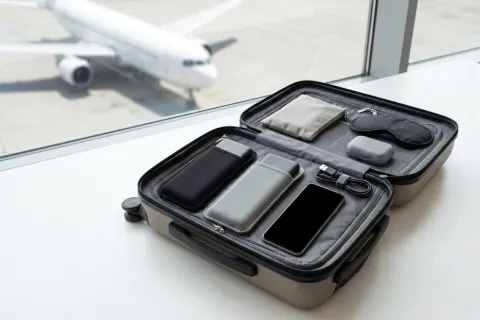
LOS ANGELES, Calif. - New regulations clarify which portable battery chargers you can bring on flights, with most travelers able to carry two 100-watt-hour power banks without airline approval.
Over 200 Asian Flights Canceled Across 3 Countries
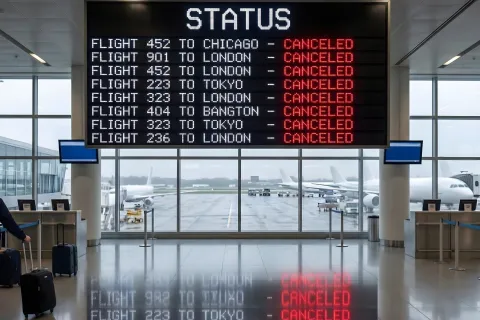
JAKARTA, Indonesia - Garuda, AirAsia, Malaysia Airlines, Lion Air, and Batik Air face over 200 flight cancellations across Indonesia, Malaysia, and Hong Kong, stranding travelers on domestic and international routes.
America's Top 7 Global Gateways for International Travel
NEW YORK, United States - Seven major US airports now dominate international traffic as air travel rebounds, concentrating global connectivity through hubs serving Europe, Latin America, and Asia.

British Airways Cuts All A380 Flights to Los Angeles
LONDON, United Kingdom - British Airways axes all Airbus A380 flights on the Heathrow-Los Angeles route for the upcoming winter, marking a 27% reduction in superjumbo services.

About the Author

Bob Vidra
Bob Vidra, based in scenic Tahoe, is an esteemed tech editor known for his deep understanding of the dynamic intersection of technology, travel, and the outdoors.