Stay current with our airline news coverage.
Air Canada Pilot Charged After Flying 900 Flights Without Proper License for 16 Years
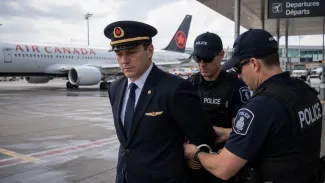
TORONTO, Canada - A former Air Canada captain faces criminal charges after allegedly piloting more than 900 commercial flights over 16 years without holding the airline transport license required to command large passenger aircraft, authorities announced this week. Geoffrey Wall, 59, of Barrie, Ontario, is accused of operating domestic and international flights between 2009 and 2025 with only a basic commercial pilot license, according to Peel Regional Police. The case has raised questions about airline credentialing processes and highlighted the multiple safety systems designed to catch such irregularities before they persist for nearly two decades.How the Alleged Fraud Went Undetected
Wall held a valid commercial pilot license throughout his employment, Air Canada confirmed in a statement. However, when he was promoted to captain, he allegedly failed to obtain the required airline transport pilot license (ATPL), the higher-level certification needed to command commercial passenger aircraft. The airline said the discrepancy was discovered during a routine documentation check that revealed anomalies. According to The Guardian, Transport Canada, the country's aviation regulator, contacted police earlier this year after identifying the licensing gap. Peel Regional Police subsequently launched a criminal investigation that included executing a search warrant. The BBC reported that investigators analyzed Wall's airline transport license and determined it had been forged. Police also allege that Wall filed a false report claiming his pilot documentation had been stolen, adding another layer to the criminal case against him.Air Canada's Response and Safety Protocols
Air Canada voluntarily reported the licensing violation to Transport Canada once it was discovered and immediately removed Wall from active duty. The airline has since terminated his employment. Transport Canada issued Wall a fine for operating without the proper license. The carrier emphasized that despite the serious licensing breach, safety was not compromised. "All pilots at Air Canada undergo mandatory recurrent training every six months to validate their flying competency, including a flight check with a certified Transport Canada check-pilot every 12 months," the airline said in a statement provided to The Guardian. Air Canada conducted an audit of all its pilots following the discovery and found no other instances of similar non-compliance. The airline acknowledged that while competency checks remained in place, proper licensing represents "an essential layer of the airline industry's multi-layered approach to safety." The company declined further comment, citing privacy laws and the ongoing criminal investigation.The Difference Between Pilot Licenses
In Canada, as in most aviation jurisdictions, pilots progress through different license levels based on training, flight hours and testing. A commercial pilot license allows individuals to fly aircraft for compensation but with certain restrictions. An airline transport pilot license, by contrast, requires significantly more flight experience (typically 1,500 hours), advanced training and rigorous examinations. The ATPL is specifically designed for pilots who will command large commercial aircraft carrying passengers. It represents the highest level of pilot certification and includes comprehensive training in areas like multi-crew coordination, complex aircraft systems and emergency procedures specific to airline operations. Wall's alleged operation with only the lower-level commercial license suggests he bypassed these additional requirements while being promoted to captain, a position that typically requires proof of ATPL certification.Criminal Charges and Legal Proceedings
Wall now faces criminal charges related to the alleged forgery and false reporting. The charges stem from what police describe as a years-long deception involving fraudulent documentation. The case remains under active investigation, and authorities have not indicated whether additional charges may follow. The incident marks a rare case of alleged credential fraud in an industry known for strict regulatory oversight and multiple verification systems.What This Means for Air Travel Safety
For travelers who have flown Air Canada or are planning future flights, this case underscores both vulnerabilities and strengths in aviation safety systems. The fact that Wall allegedly flew for 16 years without proper certification points to gaps in how airlines verify and maintain records of pilot qualifications during employment, not just at hiring. However, the multiple safety layers Air Canada cited, including biannual competency training and annual check flights with Transport Canada evaluators, appear to have functioned as intended. These systems verify that pilots can actually fly the aircraft safely, regardless of what their paperwork says. The mandatory recurrent training means Wall was repeatedly evaluated and cleared by certified check pilots throughout his tenure. This distinction matters. While proper licensing is absolutely essential and its absence represents a serious regulatory violation, the case did not involve a pilot who lacked flying skills or knowledge. Rather, it involved someone who allegedly possessed the competency but circumvented the formal certification process through fraudulent documentation. Air Canada's statement that safety was not compromised likely reflects the fact that Wall passed the same practical flight checks that properly licensed captains must complete. For travelers, the incident reinforces that airline safety relies on redundant systems rather than single points of verification. When one layer fails, as the licensing verification apparently did here, other layers, particularly the hands-on competency evaluations, continue to function. The case also demonstrates that when irregularities surface, even years later, regulatory bodies and airlines take swift action. Transport Canada's detection of the anomaly and Air Canada's immediate removal of the pilot and company-wide audit show the corrective mechanisms work when triggered. Passengers booking flights on Air Canada or any major carrier can take some reassurance from the industry's multi-layered approach, while recognizing that this case has likely prompted tighter scrutiny of pilot credentials across the sector. Expect airlines and regulators to review their verification processes to prevent similar gaps from persisting undetected.More travel news
Major Airlines Battle Airspace Bans and Travel Chaos
TORONTO, Canada - Air Canada joins Delta, British Airways, Lufthansa, and other major carriers navigating Middle East airspace restrictions that threaten international route networks.
Air Canada Calls Seat Scraping a Federal Crime
WILMINGTON, Del. - Air Canada's lawsuit against popular award search tool Seats.aero escalates, with the airline claiming data scraping violates federal computer fraud law and the startup countering with antitrust allegations.
Major Airlines Cancel Dozens of Japan Flights in 2026
TOKYO, Japan - ANA, Air Canada, KLM, Jetstar, and Skymark grounded 17 flights across Japan's busiest airports, disrupting major routes to Toronto, Amsterdam, and key domestic cities.
Air Canada Slashes 13 Global Routes Through Fall 2026
TORONTO, Canada - Air Canada suspends 13 international routes across Europe, Asia-Pacific, and Latin America despite maintaining dominant position with 274 daily international departures.
About the Author

Andy Wang
As our Asia Editor and a first-generation American, Andy Wang brings a unique dual perspective to Jetsetter Guide.