Stay current with our airline news coverage.
Engineering Discomfort for Profit
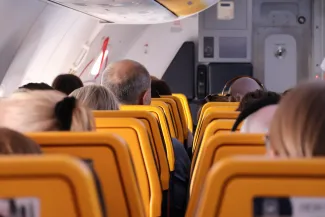
These aren't cheap seats in the sense of being poorly made; they're expensive seats engineered to be as cheap as possible to operate. Every element of that rigid, non-reclining design is a calculated cost-reduction tool, according to Simple Flying. By eliminating the mechanical reclining apparatus, Ryanair cuts weight, reduces maintenance complexity, and shaves time off aircraft turnarounds. Slimline seats weigh less than traditional ones, which means lower fuel burn over thousands of flights. Tighter seat pitch and thinner backrests let the airline pack in more rows without technically violating safety regulations. On a Boeing 737, that translates to fitting aircraft at or near the maximum allowable seat count, significantly lowering the cost per seat and enabling Ryanair to undercut competitors on price. It's a textbook example of operational efficiency disguised as passenger discomfort. And it works.The Paradox of Europe's Most Profitable Airline
Ryanair doesn't see comfort or luxury as essential for being a successful airline, Simple Flying noted. Instead, offering the lowest fares possible is what does. That philosophy has carried the carrier from loss-making status in the late 1980s to its current position among the most profitable carriers in the world, according to academic case studies on its evolution. The numbers back it up. Earlier this year, Ryanair announced it had become debt-free after repaying its final €1.2 billion bond, according to Simple Flying. The airline now owns or controls around 620 Boeing 737 aircraft, a fleet size that reflects both aggressive expansion and the financial strength of its high-utilization, low-cost model. Growth has averaged around 10% annually in many years, fueled by a business model that combines dense seating with high load factors, rapid turnarounds, and extensive ancillary revenue streams. Passengers pay extra for checked bags, seat selection, priority boarding, and just about anything else that used to come with the ticket. Headline fares can dip as low as £10 (about $13) on some routes, with profits increasingly driven by those add-on charges rather than the base price. Ryanair also leans heavily on secondary and out-of-the-way airports, which offer lower landing fees and incentives, further reducing operating costs and enabling the quick turnarounds that keep planes in the air and earning revenue.The Trade You're Actually Making
Here's the part worth understanding if you fly Ryanair or are considering it: the discomfort isn't a bug, it's the entire business model. You're not paying for a pleasant experience; you're paying the absolute minimum to get from Point A to Point B, and every inch of space, every ounce of padding, every feature that might make the flight more comfortable has been systematically removed to make that fare possible. Investment research has characterized the Ryanair experience as including additional surcharges, uncomfortable seats, a lack of in-flight entertainment selections, and bad customer service. Industry and academic commentary frequently highlight the paradox: Ryanair is among Europe's most profitable and most widely used airlines while also being one of the most criticized for discomfort and customer experience. The airline has periodically floated extreme cost-cutting ideas, such as standing-room concepts or charging for toilets, reinforcing its reputation for pushing the limits of what passengers will tolerate in exchange for low fares. Some of those ideas never materialized, but they signal how seriously Ryanair takes the trade-off between cost and comfort.What This Means When You're Booking
If you're deciding whether to fly Ryanair, the question isn't whether the seats are uncomfortable. They are. The question is whether the fare savings justify an hour or two in a rigid, non-reclining seat with minimal legroom. For short hops around Europe, many travelers find the trade acceptable. A £10 fare to Barcelona or Dublin can be hard to pass up, especially if you're packing light and don't need to pay for extras. But go in with your eyes open: the base fare is just the starting point. Add a checked bag, pick a seat, and grab a snack onboard, and the total can climb quickly. It's also worth noting that Ryanair's approach is no longer an outlier. Competitors have adopted elements of its unbundled, high-density model, indicating industry-wide pressure toward similar cost and seating practices. That means the gap between Ryanair's cabin and those of legacy carriers may be narrowing, not widening. The real insight here is that Ryanair has proven you can build one of Europe's most profitable airlines by making flying as uncomfortable as possible, as long as the price is low enough. That's not a criticism, exactly; it's just the deal on the table. Whether it's worth it depends entirely on how much you value comfort versus cost, and how long you're willing to sit in that rigid plastic chair.More travel news
Ryanair Adds Three Jets to Slash Dublin Fares
Dublin, Ireland - Ryanair's three-aircraft expansion promises nearly two million more seats and lower fares, but the real story is what changed at Dublin Airport to make it happen.

UK probes Ryanair for charging parents to sit with kids
LONDON, United Kingdom - The Competition and Markets Authority is examining whether Ryanair charged parents unfair fees to sit with their children, a practice the airline says it doesn't actually do.
Europe Grinds to Halt With Nearly 2000 Flights Delayed
BERLIN, Germany - Budget travelers face widespread disruptions as France, Norway, Switzerland delay 1,927 flights and cancel 70 more, hitting Eurowings, KLM, and Ryanair.
Ryanair Boss Demands Airport Booze Crackdown
DUBLIN, Ireland - Ryanair chief calls for airport alcohol crackdowns and two-drink limits, citing rising disruptions; critics see a revenue play.

About the Author

Bob Vidra
Bob Vidra, based in scenic Tahoe, is an esteemed tech editor known for his deep understanding of the dynamic intersection of technology, travel, and the outdoors.