

Stay current with our cruise news coverage.
How Travelers Reach the World's Most Remote Park
Without roads, hotels, or permanent settlements inside the park's boundaries, visitors depend entirely on specially equipped expedition vessels for both transportation and lodging. "Specifically in East Greenland, there are very few towns or communities, so specially outfitted expedition ships provide the best access," said Cranney, according to TravelPulse. The brief summer window, when retreating sea ice allows ships to navigate coastal waters and probe deep into fjord systems, shapes the entire visitor experience. Travelers should expect expedition-style travel in its truest form: small group landings via Zodiac boats, constant weather contingencies, and itineraries that shift hour by hour based on ice conditions and wildlife movements. The park's infrastructure consists solely of a handful of military and scientific outposts, including stations manned by Denmark's legendary Sirius Patrol, which conducts sovereignty and law enforcement patrols by dog sled across thousands of empty miles.Arctic Wildlife in a Changing Habitat
The park shelters some of the Arctic's most iconic species, from musk oxen grazing tundra meadows to narwhals and belugas navigating offshore waters. Polar bears, however, remain the animal most travelers hope to encounter. "Polar bears are regular visitors to the park. During the summer and early autumn, when expedition vessels reach the area, they are often seen along the coastal pack ice and occasionally on land," said Pelin Asfuroglu, according to TravelPulse. Yet expectations require careful calibration. "Wildlife in East Greenland is not as dense or numerous as many think; unless you are on a niche trip focused on traveling through sea ice to possible polar bear hunting areas," Cranney noted, according to TravelPulse. The vastness that makes the park extraordinary also means sightings are never guaranteed, and animals exist at densities that reflect the harsh constraints of survival at extreme latitudes. Climate change adds urgency to every wildlife encounter. Earlier sea ice breakup, glacier retreat, and warming waters are altering hunting patterns for polar bears, migration corridors for marine mammals, and vegetation zones for terrestrial grazers. Travelers witness these shifts firsthand: calving glaciers, meltwater torrents, and ice edges that recede farther each season, all visible evidence of an ecosystem under pressure.Beyond Wildlife: Geology and Human History
The park offers more than wildlife spectacle. "Northeast Greenland National Park is not only a remarkable wildlife sanctuary but also an extraordinary place for geology and early human history," Asfuroglu said, according to TravelPulse. Glacial valleys, tectonic formations, and fjord systems tell a story of ice ages and continental drift written in stone and ice. Archaeological sites scattered along the coast reveal centuries of Inuit presence, with ancient hunting camps and stone structures offering quiet testimony to human adaptation in one of Earth's most unforgiving environments. For travelers accustomed to overcrowded heritage sites, standing alone amid ruins where no visitor facilities, interpretive signs, or crowds intrude creates a profoundly different kind of cultural encounter. Expedition ship passengers also gain rare insight into one of the Arctic's most unusual institutions. "Guests are often very surprised to learn that patrols are usually carried out in pairs using dog sleds with about a dozen dogs, sometimes lasting up to four months, and often without any additional human contact," Asfuroglu said, according to TravelPulse. The Sirius Patrol's work, conducted across terrain where mechanical vehicles fail and satellite communication remains spotty, underscores both the scale of the park and the commitment required to maintain Danish sovereignty in the High Arctic.Reconsidering Remote Wilderness Travel
For families accustomed to national parks with visitor centers and marked trails, Northeast Greenland represents a fundamentally different category of protected area. There are no facilities for independent travelers, no options for last-minute itinerary changes, and no safety net beyond what the expedition team provides. This is not a destination that accommodates children casually; the physical demands, safety protocols, and rigid schedule constraints make it best suited to older teens and adults prepared for genuine expedition conditions. Multi-generational groups considering an Arctic voyage should weigh both the wildlife rewards and the climate reality embedded in every moment spent in the park. Watching glaciers calve or standing on tundra softening with permafrost thaw offers visceral evidence that abstractions like "climate change" translate into dramatic, visible transformation. For travelers seeking more than a luxury getaway, particularly those wanting their journeys to carry educational weight, few places deliver that lesson with more clarity. The logistical commitment is considerable: expedition cruises to Northeast Greenland typically span two weeks or more, command premium pricing, and require significant advance planning given the limited number of permitted vessels and departures. Yet for those drawn to true wilderness and willing to accept the inherent unpredictability of Arctic travel, the park delivers an experience increasingly difficult to find elsewhere; a landscape vast enough and empty enough to remind us what the world looked like before we filled it, and what we stand to lose as warming continues. Travelers drawn to this kind of journey should recognize that visiting the world's largest national park isn't simply about checking off a superlative. It's about bearing witness to a place where the stakes of environmental change are written in ice, stone, and the survival of species that have nowhere else to go.More travel news
Aurora Expeditions Welcomes Kids on Remote Voyages
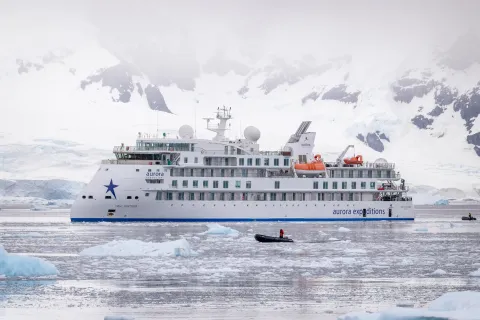
Sydney, Australia - Aurora Expeditions has lowered its minimum age requirement to six, bringing families with school-age children onto expedition ships bound for Antarctica, the Arctic and other remote regions.
Polar Trip Demand Soars: Book Years Ahead Now
GLOBAL - Arctic and Antarctic expedition cruises are selling out 18 to 24 months in advance as passenger numbers surge and new environmental rules cap ship sizes in fragile polar regions.

Quark Unveils 70-Plus Polar Expeditions for 2028
SEATTLE, Washington - Quark Expeditions has begun accepting reservations for polar voyages departing in 2028 and 2028-29, the earliest program launch in the expedition operator's history.

Secret Atlas Adds Solo Cabins to Polar Expedition Ship
OSLO, Norway - Secret Atlas has redesigned its flagship polar vessel Freya to offer six dedicated single cabins on a ship that carries just 12 guests, eliminating single supplements for solo Arctic expedition travelers.

About the Author

Jennifer Wilmington
Jennifer Wilmington is a distinctive voice in the world of family and luxury travel, offering unique perspectives derived from her diverse background and experiences.


