Timeline and Technology
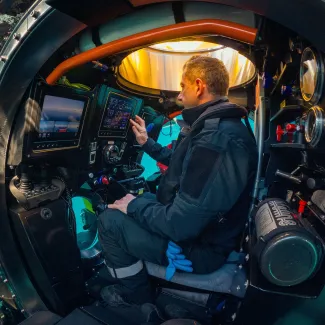
The team at CSSRC, located in Wuxi northwest of Shanghai, is moving quickly. They've committed to delivering the first prototype before the end of 2023, with full commercial operations expected to launch by 2030. That seven-year window between prototype and commercial service suggests a careful, methodical approach to safety testing and regulatory approval, which feels appropriate given the extreme environment. "People will be able to travel to a depth of about 1,000 meters in the submersible," Ye Cong, director of the CSSRC, told China Daily. The emphasis on panoramic viewing capabilities suggests this won't be a purely scientific vessel retrofitted for tourism, but rather a purpose-built experience designed to maximize what passengers can actually see at those depths.What This Means for Food and Culture Tourism
At first glance, a submersible might seem outside the usual scope of culinary and cultural exploration. But the intersection is more relevant than you'd think. China's relationship with the ocean runs deep, literally and figuratively. Coastal provinces have built entire culinary traditions around seafood, and understanding where that food comes from, how marine ecosystems function at different depths, and what sustainable fishing really means takes on new dimension when you've witnessed it firsthand. The planned 2030 launch also aligns with China's broader push to develop domestic tourism experiences that rival international destinations. Just as food tourism has evolved from simple restaurant visits to immersive farm tours, cooking classes, and market explorations, adventure tourism is expanding to include experiences previously reserved for scientists and researchers.Practical Considerations
The CSSRC team described these future trips as "affordable," though no specific pricing has been announced. Context matters here. Compared to existing deep-sea tourism options, which can cost tens of thousands of dollars per person for less dramatic depths, the Chinese offering could genuinely democratize access to this type of experience. The 3,280-foot depth is strategically chosen. It's deep enough to encounter marine life and geological features impossible to see from standard recreational diving depths, yet it avoids the extreme engineering challenges and costs associated with the deepest ocean trenches. At 1,000 meters, passengers will descend into what oceanographers call the bathyal zone, where sunlight barely penetrates and pressure reaches over 100 atmospheres.Regional Context
For travelers planning extended trips through China, this development adds another dimension to coastal itineraries. Cities like Shanghai, already hubs for food tourism with their soup dumpling institutions and modern dining scenes, could serve as gateways to these underwater expeditions. The combination of street food exploration, high-end restaurant experiences, and now deep-sea tourism creates a compelling argument for extended stays in eastern China. The timing also reflects China's growing confidence in its domestic tourism infrastructure. Rather than simply copying Western models, they're developing unique offerings that leverage local expertise in marine engineering and oceanographic research.Looking Ahead
The seven-year timeline to commercial operation might test the patience of eager travelers, but it's worth watching how this project develops. The prototype completion by end of 2023 will provide the first real indication of whether the ambitious depth targets and panoramic viewing capabilities are achievable at scale. For now, the announcement serves as a reminder that the next frontier in experiential travel isn't always horizontal. Sometimes it's vertical, pointing straight down into environments we're only beginning to make accessible to ordinary travelers rather than just scientists and explorers. As someone who's spent years advocating for food and cultural experiences that go beyond surface-level tourism, I find this kind of development genuinely exciting. The ocean feeds much of Asia, shapes coastal cultures, and drives regional cuisines in ways we often take for granted. Getting to witness that ecosystem at depth, to understand the environment that produces the fish we eat and the traditions we celebrate, adds context that simply can't be replicated in aquariums or documentaries. Whether this becomes a must-do experience for travelers or remains a niche adventure offering will depend largely on execution, safety record, and yes, final pricing. But the ambition alone signals that China is serious about expanding what's possible in domestic tourism, one kilometer at a time, straight down.More travel news
Lufthansa Blocks First Class Awards for Millions
FRANKFURT, Germany - Lufthansa blocks first-class award redemptions for frequent flyers in three major markets, eliminating a prized benefit for millions of travelers who've been banking miles for premium cabin flights.

China Mandates New Digital Arrival Card for All Visitors
BEIJING, China — The National Immigration Administration debuts a mandatory digital arrival system requiring online submission up to 72 hours before entry, streamlining mainland China's border control.

Hong Kong Seizes Devices If Travelers Refuse Passwords
HONG KONG — Refusing to unlock your phone or laptop for Hong Kong authorities is now a criminal offense under expanded national security regulations.
China Debuts Photography Train With Onboard Photo Sessions
HARBIN, China — Train Y783 offers passengers complimentary professional photo shoots, costumes, and styling as rail travel evolves into experiential entertainment.

About the Author

Andy Wang
As our Asia Editor and a first-generation American, Andy Wang brings a unique dual perspective to Jetsetter Guide.