Stay current with our cruise news coverage.
GLOBAL — I've watched the hostel common room evolve from chaotic meet-cute central to a surprisingly curated affair, and honestly, I didn't see this coming. The kids (and yes, I'm calling them that even though I'm solidly millennial myself) are signing up for organized group trips with complete strangers. Not backpacking trips where you accidentally fall into a travel family over cheap beer and shared misery on an overnight bus. I'm talking about intentionally, deliberately paying money to be placed with a group of people they've never met, with an itinerary and a group chat and matching departure dates. And apparently, this is the future.
The Paradox of Solo Travel That Isn't Actually Solo
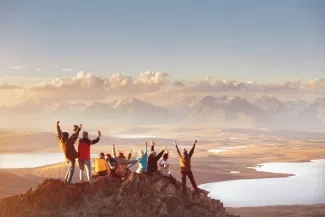
According to reports published on March 16, 2026, millennials and Gen Z are increasingly opting for curated group trips with strangers, transforming travel into a platform for connection and shared experiences. It's a fascinating twist on the traditional backpacker ethos. We spent decades romanticizing the lone wolf traveler, the person who throws a dart at a map and disappears into the sunset with nothing but a passport and a vague sense of direction. But somewhere between Instagram burnout and the realization that eating alone for the 47th consecutive dinner hits different after a while, young travelers started craving something else: structure with spontaneity, independence with built-in community. The concept is straightforward. Companies are packaging trips specifically designed to throw compatible strangers together. You sign up, you show up, and suddenly you're in a van with seven people you met three hours ago, heading toward a beach bonfire or a jungle trek or whatever curated adventure someone decided would photograph well. It's hostel culture meets summer camp meets extremely intentional friendship formation.
Why Stranger Danger Became Stranger Friendship
I get the appeal, even if it makes my old-school backpacker heart twitch a little. There's something genuinely exhausting about constantly being "on" as a solo traveler. The mental load of making every single decision, navigating every interaction, reading every room to figure out if this is a crew you want to sink a few hours into or if you should fake exhaustion and retreat to your bunk. Group trips eliminate that friction. Someone else handles logistics. The social contract is pre-established. You're all there for the same reason, which creates an odd intimacy right out of the gate. And let's be real: dating apps ruined us for organic connection. An entire generation learned to optimize first impressions, swipe through options, and approach relationships (romantic or platonic) with a weirdly transactional efficiency. Group travel with strangers is just Tinder for friendship, except you're locked into a multi-day experience instead of ghosting after one awkward coffee. You can't swipe left on someone when you're sharing a twelve-person Airbnb in Tulum.
The Economics of Curated Connection
There's also a practical angle nobody wants to admit out loud. Solo travel got expensive. Hostels aren't the fifteen-dollar-a-night miracle they used to be, and splitting costs as a solo traveler means you're always paying full price for private rooms, taxis, tours, everything. Group trips bundle those expenses. Suddenly that surf-and-yoga retreat in Costa Rica or that week exploring Patagonia becomes almost affordable because economies of scale kicked in. You're not just paying for the experience; you're paying for pre-negotiated group rates and the luxury of not having to research a single damn thing. I've met travelers on these curated trips, and the vibe is distinct. There's less of the chaotic energy that defined classic backpacker culture, fewer 4 a.m. kitchen conversations fueled by questionable decisions and cheaper wine. Instead, there's a polished intentionality. People show up ready to perform their best travel selves. They've already Instagram-stalked each other. They know what they're getting into, or at least they think they do.
What Gets Lost in the Curation
But here's where I get skeptical. Travel has always been about the unplanned moments, the disasters that become stories, the wrong bus that leads to the best week of your trip. Curated group travel smooths out those edges. It's designed to minimize friction, which also means minimizing the weird, uncomfortable, transformative stuff that happens when you're truly navigating uncertainty alone. I'm not saying these trips are shallow. People form real friendships. They have genuine experiences. But there's a safety net that traditional backpacking never offered, and that safety net changes the psychology of the journey. You're not really testing yourself when someone else built the itinerary, booked the accommodations, and ensured the group dynamic would be Instagram-friendly. You're participating in an experience, which is valid, but it's not the same as creating one from scratch.
The Verdict From Someone Who's Seen Both Sides
Still, I can't entirely knock it. The world changed. Cities got more expensive, borders got more complicated, and the romantic chaos of winging it lost some of its shine when everyone realized that being perpetually exhausted and occasionally unsafe isn't actually the point of travel. If curated group trips get people out of their comfort zones, building friendships across borders and time zones, then maybe that's the evolution hostel culture needed. Just don't call it backpacking. Call it what it is: millennial summer camp with better accommodation and a shared Google Drive full of recommendations. And honestly? Sometimes that's exactly what we need.
More travel news
Travel Influencers Become Digital Brokers for Gen Z
Digital Travel — Influencers have evolved from content creators to market brokers as platforms prioritize retention over virality, reshaping how destinations are discovered and booked.
Oil Prices Threaten Gen Z Thailand Tourism Plans
BANGKOK, Thailand — Rising oil prices could deter young travelers to Thailand, the tourism permanent secretary warns, as foreign arrivals from key markets struggle to recover to pre-pandemic levels.

Global Chaos Makes Every Vacation a Calculated Risk
GLOBAL — Vacation planning has evolved from comparing airfares to scanning risk maps as conflicts, strikes, and shifting alliances reshape where travelers feel they can safely go.
Shrinking Seats Make Flying Miserable for Travelers
GLOBAL — Passenger frustration with cramped cabins intensifies as carriers reduce legroom to deliver rock-bottom fares while facing constraints on seat design and evolving body dimensions.
About the Author

Mariana Torres
Mariana is a 33-year-old travel writer and backpacker who specializes in finding the pulse of a place far beyond the tourist maps.