

Stay current with our travel events coverage.
Italy Moves Toward Preemptive Biometric Surveillance
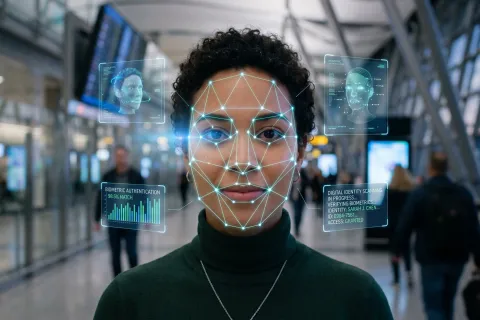
ROME, Italy - Italy's government has accelerated approval of a legislative decree that authorizes police to collect and store facial recognition data from public spaces for up to seven days, even when no crime has been committed. The measure, which adapts national law to comply with the European Union's AI Act, has triggered immediate pushback from opposition parties Pd and M5s, according to Reuters. Under the proposed framework, biometric data captured by surveillance cameras in designated sensitive locations, including public squares, stadiums, and demonstration sites, can be retained for seven days. If a crime occurs during that window, the stored facial data becomes investigative material. If not, it's deleted, Reuters reported. The shift marks a significant departure from Italy's previous stance on facial recognition technology, which had been under moratorium in public and publicly accessible spaces until Dec. 31, 2025, except for specific crime prevention and prosecution purposes.Two Articles Create Different Surveillance Pathways
The decree's structure reveals two distinct approaches to biometric identification. Article 8 permits real-time facial recognition in extreme cases, subject to prior authorization from judicial authorities. But Article 10, the provision drawing the most criticism, allows for the retention of biometric data captured before any criminal activity takes place, according to Reuters. This preemptive collection framework applies to locations deemed sensitive by authorities. Someone walking through a piazza, attending a sporting event, or participating in a protest could have their facial data captured and stored without suspicion of wrongdoing. The legal justification rests on location designation rather than individual behavior. The government is positioning the measure as alignment with broader EU regulations, including GDPR, the law enforcement directive, and the AI Act. But the implementation goes beyond passive compliance. It creates an infrastructure for continuous biometric monitoring in spaces where Italians routinely gather, with retention periods that extend well beyond the moment of capture.Opposition Questions the Boundary Shift
The Democratic Party (Pd) and Five Star Movement (M5s) have raised objections to the speed and scope of the government's approach. Their concerns center on the erosion of privacy protections and the implications of storing biometric data from individuals not suspected of any offense. The seven-day retention window is the critical variable. It transforms surveillance from a reactive investigative tool into a speculative archive. Police don't need to identify a threat in real time. They can review who was present in a given location days after an incident, cross-referencing faces against stored data to reconstruct movements and associations. For travelers, particularly those visiting Italy for protests, large public events, or even routine tourism in monitored zones, the implications are tangible. Attendance at a political rally, a football match, or a crowded landmark could result in facial data being captured and held in a law enforcement database, accessible for investigative purposes if any incident occurs within that seven-day span.The Surveillance Calculus Just Changed
Italy has historically maintained tighter restrictions on biometric surveillance compared to some European neighbors. This decree represents a policy inflection point, one that aligns Italy more closely with jurisdictions that have embraced facial recognition as a routine policing tool. From a traveler's perspective, the change introduces a new layer of data exposure. Visitors to Italy should assume that presence in high-traffic public areas, especially during events with heightened security, may result in biometric capture. The data won't necessarily be linked to your identity immediately, but it's in the system, retained for a week, and available for correlation if authorities deem it relevant. This matters most for photographers, journalists, and activists working in public spaces. If you're documenting a demonstration or covering a political event, your face is likely being logged alongside participants. The distinction between observer and subject collapses when the camera doesn't discriminate. The practical risk for most leisure travelers remains low. But the principle is worth noting. Italy is building the infrastructure for retrospective identification in public spaces. The seven-day window is arbitrary, and policy tends to expand rather than contract once the framework is in place. If you're planning travel to Italy and expect to attend large public gatherings, particularly those with political or security dimensions, understand that your biometric data may be captured and stored. There's no opt-out for being in a monitored location. The technology is designed to work without your consent or awareness. The debate over this decree will likely continue through parliamentary review, but the trajectory is clear. Italy is shifting toward preemptive biometric surveillance, and travelers should adjust expectations accordingly. The question isn't whether facial recognition is coming to Italian public spaces. It's already here. The only variable now is how long authorities can keep what they collect.More travel news
Europe Unveils Biometric Travel App for Faster Borders
LISBON, Portugal - Portugal joins Sweden in full digital border adoption as the EU's Travel to Europe app rolls out across Schengen states, promising faster entry checks amid operational challenges.
Milan Airport Strikes Force American Airlines Travel Changes
MILAN, Italy - American Airlines has issued a travel alert for flights at two Milan airports on July 5 as industrial strikes threaten widespread disruption across Italy's aviation sector.

Italy Heat Alert Expands to 8 Cities Before Weekend
ROME, Italy - Orange heat risk warnings expand across Italian cities as authorities brace for an incoming heatwave threatening vulnerable populations.

EU Bans Airline Fees for Carry-On Bags
Brussels, Belgium - After a decade of negotiations, European lawmakers finalize passenger protections that will eliminate carry-on fees and family seating charges starting next year.

About the Author

Jeff Colhoun
Jeff Colhoun is an acclaimed travel writer, photographer, and filmmaker, whose work is respected both in the United States and internationally.


