

Stay current with our travel events coverage.
Tourism Department Reinforces Mayon Volcano Safety Warning
MANILA, Philippines - The Department of Tourism has issued an advisory discouraging non-essential travel to areas surrounding Mayon Volcano, which remains under Alert Level 3 due to ongoing volcanic unrest that began in early January 2026. The advisory addresses safety protocols for both domestic and international travelers considering visits to the Bicol Region, where Mayon's elevated activity poses significant hazards to those venturing too close to the volcano's 6-kilometer Permanent Danger Zone. "The Department of Tourism advises the public that Mayon Volcano remains under Alert Level 3 (Magmatic Unrest). In line with safety protocols, entry into the 6-kilometer Permanent Danger Zone (PDZ) is strictly prohibited due to the ongoing risk of hazardous volcanic activity," according to Philstar.What Alert Level 3 Means for Travelers
The Philippine Institute of Volcanology and Seismology raised Mayon to Alert Level 3 on January 6, 2026, signaling that magma is positioned close to the crater. The designation indicates potential for eruption within weeks if the trend continues toward increasing unrest. Current volcanic activity includes more than 100 rockfalls per day, sulfur dioxide emissions ranging from 3,000 to 5,000 tons daily, and measurable ground deformation. These indicators collectively point to sustained magma movement beneath the surface. "Magma is close to the crater. If trend is one of increasing unrest, eruption is possible within weeks," according to Hazard Hunter at PHIVOLCS. The Permanent Danger Zone now extends 6 to 8 kilometers in radius from the summit crater, affecting municipalities including Guinobatan, Camalig, and Santo Domingo. More than 80 families, totaling over 400 individuals, currently occupy evacuation centers established outside the hazard zones.Implications for Albay Tourism
Mayon Volcano typically draws roughly 500,000 visitors annually, with tourism contributing an estimated 10 to 15 percent of Albay province's GDP. The sustained Alert Level 3 status directly impacts this economic driver, as popular viewing areas and hiking routes remain off limits. The volcano has erupted more than 50 times since 1616, making it one of the Philippines' most active volcanic systems. Its last major eruption occurred in 2018, displacing more than 90,000 people and shutting down tourism operations for an extended period. Tourism operators in the region have pivoted to promoting alternative attractions, including whale shark encounters in Donsol and distant vantage points outside the danger zone. These alternatives aim to keep visitor interest alive while respecting safety boundaries established by PHIVOLCS. The DOT advisory aligns with protocols established under Republic Act 10121, the Philippine Disaster Risk Reduction and Management Act, designed to protect both residents and visitors during volcanic crises. The framework emphasizes proactive communication and strict enforcement of exclusion zones during periods of elevated risk.Sustained Unrest and Long-Term Planning
Mayon's Alert Level 3 classification has now persisted for nearly four months, an unusually extended period of magmatic unrest without progressing to full eruption or de-escalating to lower alert levels. This prolonged state creates uncertainty for tourism businesses dependent on seasonal visitor flows and for travelers planning trips to the Bicol Region. Scientific monitoring focuses on tracking inflation patterns and gas emission trends, which serve as primary indicators of whether conditions will intensify toward Alert Level 4 or stabilize enough to warrant a downgrade. Current data shows no clear movement in either direction, keeping the region in a holding pattern. For travelers with plans already booked to Albay or the broader Bicol area, the calculus centers on proximity. Destinations outside the 6- to 8-kilometer danger zone, including the provincial capital Legazpi City, remain accessible and operational, though some outdoor activities and viewing platforms stay restricted.Risk Assessment for Current Conditions
The reality is that Alert Level 3 isn't merely a bureaucratic label; it reflects active magma intrusion with measurable surface manifestations. The 3,000 to 5,000 tons of sulfur dioxide venting daily isn't background noise, and the rockfall frequency signals continuing structural instability on the volcano's slopes. This is not a theoretical risk. For photographers and adventure travelers accustomed to working in unstable environments, the temptation to push boundaries exists. The visual payoff of documenting an active volcano is undeniable. But the 6-kilometer exclusion isn't arbitrary; pyroclastic flows and ballistic projectiles don't respect individual risk tolerance. The 2018 eruption demonstrated Mayon's capacity to escalate rapidly, and the current unrest maintains that same potential. Travelers should also consider that evacuation infrastructure, while functional, prioritizes local residents. In the event of sudden escalation, visitor mobility becomes secondary to community safety protocols. That's not a criticism of response systems; it's the operational reality in any disaster scenario. The broader Bicol Region still offers viable travel options, from coastal areas in Camarines Sur to island destinations accessible from Legazpi. But anyone traveling to Albay right now should maintain flexible itineraries and monitor PHIVOLCS updates directly rather than relying solely on tour operator assurances. Alert levels can change within hours based on seismic data or gas flux readings, and ground-level operators don't always receive or relay updates in real time. For those already committed to travel in the region, staying outside the extended danger zone and maintaining awareness of evacuation routes represents the baseline for responsible planning. For those still in the booking phase, deferring Mayon-specific itineraries until the alert level drops to 2 or lower is the straightforward call.More travel news
Fly Business to Manila for 75K Miles Plus Fees
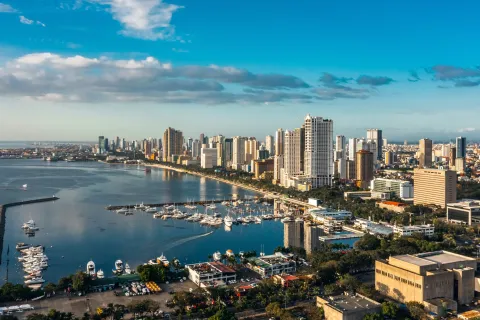
SEATTLE, Wash. - More than 1,300 nonstop business-class award seats to the Philippines just opened up through Alaska Airlines Atmos Rewards, starting at 75,000 points and $26.
California Airports Battle for Lucrative Philippine Routes
LOS ANGELES - Delta Air Lines adds another transpacific route from LAX, deploying A350-900 aircraft to Manila as the carrier challenges United's dominance at San Francisco for Asia-Pacific traffic.

Philippine Airlines Boosts North America Routes
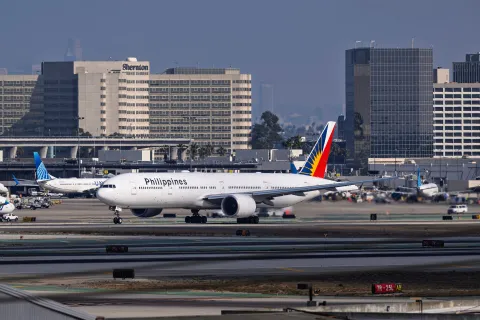
MANILA, Philippines - Philippine Airlines expands trans-Pacific reach with increased frequencies to three major North American gateways, betting on diaspora demand and new wide-body capacity.

Philippine Airlines Joins oneworld Alliance Today
MANILA, Philippines - Philippine Airlines becomes oneworld's newest member, giving frequent flyers award access to 15 Philippine island destinations and elite perks across a global network.
About the Author

Jeff Colhoun
Jeff Colhoun is an acclaimed travel writer, photographer, and filmmaker, whose work is respected both in the United States and internationally.


