Stay current with our travel events coverage.
A Serial Threat in Protected Wilderness
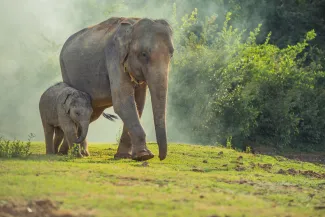
What distinguishes this tragedy from the hundreds of other elephant-related deaths across Thailand is the documented pattern. Oyewan has now been definitively linked to three human fatalities, raising questions about when wildlife management crosses from conservation into public safety imperative. The elephant's history suggests learned behavior rather than isolated defensive reactions, a distinction that fundamentally alters how authorities must respond. "The wild bull elephant could have been responsible for several more deaths that remain unsolved," Chaiya said, a sobering acknowledgment that the true toll may extend beyond confirmed cases. Park officials have scheduled a meeting for Friday to determine Oyewan's fate. "We will probably decide to relocate him or change his behavior," Chaiya said, indicating that lethal measures remain off the table despite the mounting casualties. The approach reflects Thailand's commitment to non-lethal wildlife management, even when confronting animals that pose demonstrable threats to human life.Population Boom Fueling Deadly Encounters
The Oyewan case unfolds against a broader and deeply troubling trend. More than 220 people, including tourists, have been killed by wild elephants in Thailand since 2012, according to national records. The fatality rate correlates directly with a dramatic population surge: wild elephant numbers have grown from 334 in 2015 to almost 800 last year, a near-doubling in just a decade. This population explosion, while representing a conservation success in one sense, has compressed the space where humans and elephants coexist. Agricultural expansion, tourism infrastructure, and traditional elephant corridors increasingly overlap, creating flashpoints where territorial animals encounter people with fatal regularity. Authorities have responded to the population boom by deploying contraceptives to manage herd growth in key provinces. Birth rates in five eastern provinces have reached 8% annually, a reproduction rate that, if unchecked, would continue accelerating human-elephant conflict. Yet even with intervention, over 100 elephants have died from these conflicts, underscoring that the violence flows in both directions.What This Means for Safari and Wildlife Tourism
For travelers drawn to Thailand's national parks and wildlife sanctuaries, the escalating conflict demands a recalibration of risk assessment. Khao Yai National Park, a UNESCO World Heritage site covering more than 2,000 square kilometers, attracts hundreds of thousands of visitors annually who come to experience its biodiversity. The park's wild elephants represent both its greatest draw and, increasingly, its most unpredictable hazard. The incident joins a growing roster of elephant attacks on tourists across the region. A Spanish tourist was killed by an elephant in a southern sanctuary in January 2025. Another fatal attack occurred in Loei province in December 2024. These are not isolated misfortunes but symptoms of a systemic imbalance between wildlife populations and the space available to sustain them without human contact. Globally, the pattern repeats. Recent months have seen fatal elephant attacks in India, where 20 people were killed in a single incident, as well as deadly encounters in Zambia, Kenya, and South Africa. The common thread is habitat compression and the collision of conservation success with inadequate space for growing populations.The Conservation Paradox
Thailand faces a paradox familiar to successful wildlife conservation programs: recovering populations eventually test the limits of coexistence. The near-doubling of elephant numbers represents decades of protection efforts bearing fruit, yet the outcome challenges the very communities living alongside these protected species. Relocating problem animals like Oyewan offers temporary reprieve but no systematic solution. Behavior modification programs, while promising, require resources and expertise that remain limited across Thailand's vast protected areas. The Friday meeting will likely produce a decision specific to one elephant, but the larger question endures: how many elephants can Thailand's remaining wild spaces sustainably support without regular fatal encounters? For visitors planning travel to Thailand's national parks, the calculus has shifted. What was once considered rare misfortune now appears as statistically predictable risk in areas with high elephant density. Hiring experienced guides, maintaining safe distances, and heeding park warnings are no longer merely recommended but essential protocols in an environment where a 65-year-old man on a morning walk with his wife can become the third victim of a single animal's pattern of violence. The beauty that draws travelers to places like Khao Yai remains undimmed, but it now carries the weight of a starker truth: successful conservation creates its own reckoning.More travel news
Oil Prices Threaten Gen Z Thailand Tourism Plans
BANGKOK, Thailand — Rising oil prices could deter young travelers to Thailand, the tourism permanent secretary warns, as foreign arrivals from key markets struggle to recover to pre-pandemic levels.

Thailand Cracks Down on Drunk Driving in Tourist Hubs
PATTAYA, Thailand — Royal Thai Police halt verbal warnings and tighten drunk driving crackdowns in key tourist zones as November 2023 zero-tolerance policy gains teeth.

Thailand targets UFO fans to hit 3tn baht by 2026
BANGKOK, Thailand — TAT unveils ambitious plan to reach 3 trillion baht in tourism revenue by promoting wellness packages and targeting UFO enthusiasts alongside traditional markets.

French Tourist Dies Taking Selfies at Thai Waterfall
KOH SAMUI, Thailand — A 22-year-old French tourist fell to his death at Na Muang 2 waterfall Monday, the latest selfie-related fatality at popular Thai waterfalls.

About the Author

Wilson Montgomery
Wilson Montgomery is a British-born travel writer who has carved a niche for himself with his compelling narratives about African travel and safari experiences.