The Business Model Shift
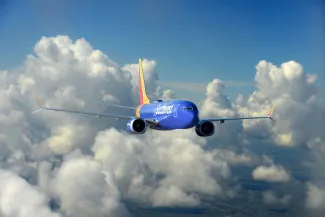
Southwest has spent the past two years methodically dismantling its no-frills identity. According to Simple Flying, the airline conducted more than eight million simulation-based boarding trials to design its new assigned-seating system, which officially replaced open seating in 2026. At the same time, it introduced new fare families including Basic, Choice, Choice Preferred, and Choice Extra, giving travelers a menu of bundled options that look a lot like what legacy carriers have offered for years. The airline also completed a fleet-wide cabin retrofit in January 2026, repitching seats across its Boeing 737s to carve out extra-legroom sections without adding a separate premium cabin, according to Simple Flying. The overnight operation touched every plane in the fleet, a logistical feat that signals just how serious management is about extracting more revenue per passenger. "The airline has officially confirmed that its open seating model will be scrapped by 2026 and a premium extra legroom section will be introduced in an attempt to drive more revenue per passenger," according to reporting on Southwest's business-model revamp cited in research. "Southwest has also revealed an expansive proposal to refurbish its interiors for a modern era of aircraft travel... stemming from research on the public's definition of an enhanced onboard experience."Why No First Class?
Here's where things get complicated. Legacy carriers make serious money from premium cabins; business and first-class tickets often account for a disproportionate share of total revenue even though they occupy a fraction of the plane. Southwest knows this. The airline reported approximately $7.2 billion in Q1 revenue in a recent quarter, according to Simple Flying, but it's still playing in a single-cabin sandbox while its competitors rake in premium fares. So why not just install first class? The answer comes down to fleet uniformity and operational simplicity. "Southwest Airlines is primarily a fixed cost business, meaning that it costs you roughly the same to fly a half empty plane than it does a full one," according to management consulting analysis of Southwest's business model cited in research. The carrier's entire operation is built around maximizing aircraft utilization and fast turnarounds, and that depends on having identical cabins across hundreds of 737s. Adding first class would require reconfiguring seats, retraining crews, adjusting catering, and complicating boarding, all of which slow things down and cost money. It would also dilute the brand. Southwest has spent decades positioning itself as the egalitarian alternative, the airline where everyone gets the same seat and pays for performance, not pedigree. Introducing a curtain between the haves and have-nots risks alienating the core customer base that made Southwest successful in the first place.The Perks They Are Adding
Instead of first class, Southwest is betting on incremental upgrades that feel premium without fundamentally changing the product. The carrier recently introduced free Starlink Wi-Fi across its fleet, though Simple Flying notes there is at least one significant catch or limitation tied to its use or availability. Extra-legroom seats now occupy the front rows of every plane, available for an upcharge that varies by route and demand. The new fare bundles let travelers pick what they value: early boarding, priority security, bonus Rapid Rewards points, or just the cheapest ticket with none of the extras. It's a classic price segmentation play, one that legacy carriers perfected years ago and that Southwest is now adopting out of competitive necessity. But even with these changes, the airline is still structurally limited. It can't charge $2,000 for a flatbed seat to New York because it doesn't have flatbed seats. It can't upsell premium meals or lounge access because those don't exist in its ecosystem. The revenue ceiling is lower, period.Restructuring While Growing
The product overhaul is happening alongside financial and operational turbulence. Southwest laid off about 75 employees despite reporting record quarterly revenue, according to Simple Flying, a sign that the airline is tightening operations even as it invests in cabin upgrades. It also cut 11 international routes after carrying around 4 million international passengers in 2025, which was described as only its fifth-best international year, according to Simple Flying. The international pullback is telling. While competitors expand long-haul premium routes with lie-flat seats and elevated service, Southwest is retreating to its domestic core, where it can leverage its operational strengths and simple product. The airline clearly recognizes it can't compete on every front, so it's doubling down on what it does best: high-frequency, point-to-point flying with a now slightly-less-simple cabin.What Budget Travelers Should Understand
If you've been loyal to Southwest because of the straightforward pricing and lack of nickel-and-diming, the new model is going to feel different. You're now choosing between fare bundles, paying extra for better seats, and navigating a boarding process that's more orderly but less flexible. The free-checked-bags policy remains intact, which is still a meaningful savings if you're hauling gear or traveling for more than a weekend, but the overall experience is drifting closer to what you'd find on United or Delta. That's not necessarily bad. Assigned seating eliminates the stress of jockeying for position in the boarding line, and extra-legroom options give taller travelers a way to buy comfort without upgrading to a different airline. But it does mean Southwest is no longer the outlier it once was. The airline is chasing the same premium revenue everyone else is after, just without the most lucrative tool in the toolbox: a real premium cabin. For now, that leaves Southwest in a middle ground. It's more polished than a true budget carrier, but it still can't compete for the business travelers who want a flatbed and a hot meal. The question is whether that's a temporary compromise or a permanent positioning, because the longer Southwest waits to add a premium cabin, the harder it becomes to justify the investment. And in an industry where the real money is up front, that hesitation could cost the airline more than just a few extra inches of legroom.More travel news
Massive Flight Chaos Hits USA With 4,508 Delays
NATIONWIDE - A single-day disruption on June 2, 2026, left thousands of passengers stranded as 4,508 flight delays and 85 cancellations swept across major U.S. carriers and states.

Southwest Reverses Plus-Size Seating Policy After Fury
Dallas, Texas - Southwest reverses a four-month-old policy that required plus-size travelers to purchase additional seats, backing down after sustained customer criticism.

Airlines Keep Breaking Wheelchairs Despite Promises
NEW ORLEANS, Louisiana - Maria Town's damaged scooter highlights a persistent crisis: U.S. airlines mishandled 1.09% of mobility devices in 2025, stranding thousands of travelers who depend on them.
Humanoid Robot Scores Its Own Airplane Seat
Oakland, California - A 75-pound humanoid robot named Bebop caused a delay on Southwest flight 1568 when flight attendants discovered its oversized lithium battery, exposing a regulatory gray zone.

About the Author

Dana Lockwood
Dana Lockwood is a rising journalist who specializes in budget-friendly solo travel.