Stay current with our airline news coverage.
What Travelers Need to Know Right Now
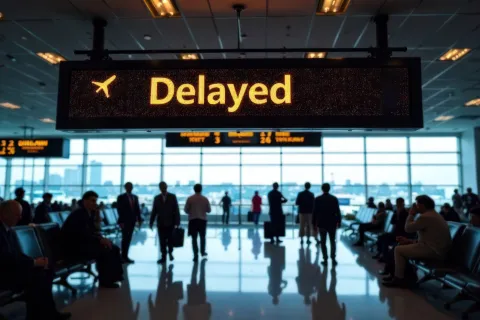
If you hold a ticket for travel into, out of, or through Buenos Aires on Feb. 19, assume your flight will not operate. That window extends from the evening of Feb. 18 through the morning of Feb. 20 as airlines reposition equipment and clear the backlog. Brazilian carriers GOL, LATAM, and Azul, which operate multiple daily frequencies between São Paulo-Guarulhos, Porto Alegre, and both Buenos Aires airports, have begun issuing free-change waivers. Check with your airline directly; policies vary, but most are offering flexibility for travel dates surrounding the strike. Rerouting options exist but require advance planning. Montevideo (MVD) and Santiago (SCL) are the most viable alternate gateways, with onward connections by bus or regional flights once Argentine services resume. Montevideo is roughly three hours by road from Buenos Aires under normal conditions; Santiago involves either a flight across the Andes or a longer overland journey through Mendoza. Neither option is quick, and both will be crowded as other travelers pursue the same contingencies. Cargo shipments face similar delays. If you're moving samples, spare parts, or time-sensitive goods between Brazil and Argentina, expect at least a 48-hour setback as logistics networks clear the jam.Why This Strike Matters Beyond One Day
The immediate disruption is obvious, but the broader context reveals a pattern that affects how you plan travel to Argentina in the months ahead. This is not an isolated labor action; it is the fourth nationwide strike since Milei took office. Each has targeted transportation infrastructure, and each has demonstrated the unions' ability to halt mobility across the country with little notice. The CGT timed this strike to align with legislative activity on labor reforms that unions view as eroding worker protections. The Senate approved Milei's bill; the Chamber of Deputies debates it this week. Whether the reforms pass or stall, the political friction is not going away, and neither is the unions' willingness to use strikes as leverage. For travelers, that means Argentina remains a destination where disruption is a feature, not a bug. If your itinerary depends on tight connections through Buenos Aires or assumes that domestic flights will operate on schedule, you are exposed to risk that goes beyond weather or mechanical delays.Brazilian Business Travel Takes a Hit
More than 220 Brazilian companies maintain operations in Argentina, and the strike lands just as many Brazilian travelers are wrapping up post-Carnival trips or heading south for business. The timing compounds the strain on airlines already stretched thin by Carnival rotations, and it highlights how interconnected Southern Cone mobility has become. Brazil's economic stake in Argentina is significant, and labor unrest there translates directly into scheduling risk and reputational exposure for Brazilian firms. Corporate travel managers should be identifying employees ticketed for Brazil-Argentina sectors between Feb. 18 and Feb. 20 and rerouting them now, before options narrow further.Practical Steps for the Next 72 Hours
If you are traveling to or through Buenos Aires this week, take these actions immediately: Contact your airline and confirm your rebooking options. Free-change waivers are in effect for most carriers, but seat availability on alternate dates is finite. Consider advancing your departure to beat the strike clock. Flights departing late on Feb. 18 may still operate, but confirm with the airline; crews and ground staff may begin walking out earlier. If rerouting through Montevideo or Santiago, verify visa and transit requirements. Uruguay and Chile have different entry rules, and some nationalities require advance authorization even for short layovers. Build buffer time into your itinerary. Even after the strike ends, expect delays as airlines reposition aircraft and work through the backlog. A connection that looks tight on paper will likely miss in practice. Monitor local news for updates on strike duration. While the official timeline is 24 hours, extensions are possible, and the unions have not ruled out additional actions if the labor reform bill advances.What This Means for Planning Ahead
Argentina's political and economic volatility is not background noise; it is a variable that shapes on-the-ground conditions in real time. If you are planning expedition travel to Patagonia, photography assignments in the northwest, or business trips to Buenos Aires, factor in the possibility of additional strikes and infrastructure disruptions over the coming months. Book refundable fares where possible, avoid itineraries that depend on same-day connections through Buenos Aires, and maintain flexibility in your schedule. Argentina remains an extraordinary destination, but it rewards travelers who plan for contingency, not convenience. The Feb. 19 strike will pass, but the underlying friction between the Milei administration and organized labor is ongoing. Travelers who understand that dynamic and adjust their planning accordingly will navigate Argentina more successfully than those who assume normalcy where none exists.More travel news
Sapphire Princess Sails from Buenos Aires to Barcelona
Buenos Aires, Argentina — The Sapphire Princess kicked off an 18-day trans-Atlantic repositioning voyage on Feb. 11, marking Princess Cruises' first European arrival of 2026.

Tourist defies Cuba travel ban to share reality
HAVANA, Cuba — An Argentine backpacker posted a candid TikTok about her Cuba trip after Buenos Aires urged citizens to avoid the island amid fuel shortages and 20-hour blackouts.

Argentines Flee to Brazil Despite Milei Tourism Hype
BUENOS AIRES, Argentina — New data shows 3.4 million Argentines visited Brazil in 2025, a 72% surge contradicting President Milei's claims of thriving domestic tourism.

Budget Backpacker's Blueprint for Patagonia 2026
PATAGONIA, Chile/Argentina — A new comprehensive budget travel guide tackles one of South America's most dramatic regions, proving adventure doesn't require deep pockets.

About the Author

Jeff Colhoun
Jeff Colhoun is an acclaimed travel writer, photographer, and filmmaker, whose work is respected both in the United States and internationally.