Stay current with our airline news coverage.
The Captain Who Reported It Got Fired Too
Here's where the story gets messier. The captain reportedly told United about what happened; he cooperated, he flagged the problem. And then he was fired anyway. Now, according to View From The Wing, the captain's AIR21 whistleblower retaliation hearing began today, more than two years after the incident. AIR21 is the federal whistleblower statute for air carrier safety, designed to protect pilots and other aviation workers who report safety violations. The hearing centers on whether the captain was punished for doing exactly what the industry says it wants: speaking up when something goes wrong. This wasn't some catastrophic emergency; the autopilot was on, the plane was at cruise, and the captain was reportedly in the lavatory when Meulens sat in his seat. But letting a non-crewmember occupy a required pilot seat during flight, even on autopilot, is a hard line violation of FAA regulations and airline policy. Post-9/11 cockpit security rules exist for a reason, and those rules don't have a carve-out for celebrity guests on charter flights. United saw a safety breach and acted. Both pilots knew better, and they let it happen. That much is straightforward. What's not straightforward is whether firing the captain who brought the issue to light sends the right message.What Message Does This Send?
Safety culture in aviation depends on people reporting problems without fear of losing their careers. If a pilot makes a mistake, admits it, and cooperates with an investigation, the just-culture approach says you fix the problem and learn from it; you don't automatically end someone's livelihood unless there's willful misconduct or recklessness. The captain in this case didn't hide the violation. He reported it. And yet he was terminated along with the first officer. Critics of United's handling see this as retaliation disguised as accountability, and that's the argument the captain is now making in his federal whistleblower case. From United's perspective, the pilots allowed an unauthorized person into the flight deck and into a required crew seat. That's indefensible under FAA rules, full stop. The airline has a duty to enforce those rules consistently, especially when the breach is captured on video and shared publicly. But there's a difference between holding someone accountable and making an example of them, and the question before the hearing is which one this was. It's worth noting that Meulens, the non-pilot at the center of the whole thing, kept his job. Rockies manager Bud Black said publicly that Meulens apologized to the organization, to United, and to the team. Major League Baseball didn't suspend or fine him. He remained the Rockies' hitting coach. Meanwhile, two professional pilots with years of training and experience are out of work.Where This Leaves the Industry
If you're a pilot watching this case, the takeaway is pretty chilling: even if you report a safety issue you were part of, you might still get fired. That's not the kind of message that encourages transparency or self-reporting, which are foundational to aviation safety. Charter operations have always existed in a slightly different cultural space than scheduled commercial flights. VIP passengers, sports teams, and corporate clients sometimes get informal access or perks that wouldn't fly, so to speak, on a regularly scheduled service. But the regulations are the same. A United 757 charter is still bound by the same FAA Part 121 rules as a United 757 flying a regular route from Newark to San Francisco. There's no exception for team charters, no gray area for letting a celebrity sit in the captain's seat because it makes for a cool Instagram post. The hearing that began today will ultimately determine whether the captain's termination violated federal whistleblower protections. If he wins, it could set a precedent for how airlines handle cases where crewmembers report their own mistakes. If he loses, it reinforces the hard line: if you let it happen, you own the consequences, even if you're the one who came forward. Either way, this case is a reminder that cockpit discipline and safety reporting are not just abstract policy debates. They're real decisions made by real people, often under pressure, and the outcomes can upend careers and shape the culture of an entire industry.More travel news
Flying With Power Banks: New Rules for LA Travelers
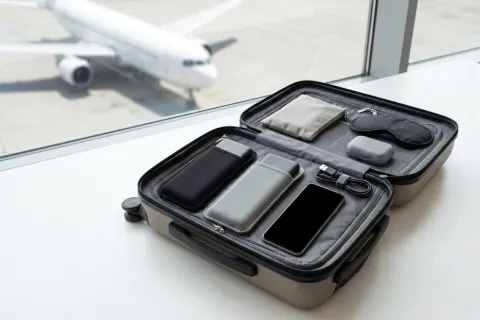
LOS ANGELES, Calif. - New regulations clarify which portable battery chargers you can bring on flights, with most travelers able to carry two 100-watt-hour power banks without airline approval.
Major US Airlines Ground Nearly 1500 Flights June 3
NEW YORK, N.Y. - Widespread disruptions across Texas, Illinois, California, Massachusetts, New Jersey, and New York grounded 142 flights and delayed 1,294 on June 3, 2026, stranding travelers on major carriers.

Newark Airport Chaos Leaves United Flyers Trapped
NEWARK, N.J. - United Airlines passengers endured multi-hour tarmac delays at Newark Liberty International Airport on May 29, 2026, in an incident that underscores America's spiraling aviation reliability crisis.

United Pilot Threatens FBI Over Passenger Hotspot Name
Seattle, Wash. - A pilot's ultimatum over a hotspot name sparks questions about authority, speech, and de-escalation at 35,000 feet.

About the Author

Jeff Colhoun
Jeff Colhoun is an acclaimed travel writer, photographer, and filmmaker, whose work is respected both in the United States and internationally.