Stay current with our hotel news coverage.
The Price-Quality Disconnect in Malaysian Borneo
Sabah has long occupied a particular niche in Southeast Asian tourism. Its offerings are specific and compelling: the opportunity to summit Mount Kinabalu, to dive the storied reefs off Sipadan, to encounter orangutans and proboscis monkeys in dense rainforest, to witness the cultural tapestry of Borneo's indigenous communities. These are experiences that command premium positioning in the marketplace, and operators have priced accordingly. Yet pricing strategy divorced from service delivery creates a precarious situation. According to a 2025 MATTA survey, 62% of international visitors rated Sabah's value-for-money as poor or very poor; this represents a dramatic increase from 28% just three years earlier. The deterioration is not subtle. Complaints filed with tourism authorities reached 4,100 in 2025, up 64% from the previous year. Overall visitor satisfaction scores dropped to 3.4 out of 5 in 2025, down from 4.1 in 2019, the last full year before the pandemic disrupted global travel patterns. The specific grievances paint a sobering picture: accommodations that fail basic cleanliness standards, staff who prove unresponsive or inadequately trained, transport arrangements that collapse without warning, food hygiene concerns that transform dream holidays into medical emergencies. In Semporna specifically, where diving tourism drives the local economy, packages marketed at premium rates have left visitors feeling exploited rather than exhilarated.Government Response and Reform Initiatives
The authorities have not remained entirely passive. In November 2025, State Tourism Minister Christina Liew announced the Sabah Tourism Revival Fund, allocating RM50 million toward worker training programs and exploratory price cap mechanisms. By early 2026, MATTA and the Sabah Tourism Board had established a Tourist Protection Taskforce, which by mid-February had processed approximately 1,200 refund requests from aggrieved visitors. "Our visitors come for our beauty and culture, but the quality of service they receive matters just as much," said State Tourism Minister Datuk Jafry Ariffin, acknowledging the scope of the challenge. The problem extends beyond individual poor performers. In Semporna alone, regulatory oversight reveals significant gaps: of 190 tourism-related premises, only 45 hold proper licenses, 59 applications remain pending, and 86 operate in outright non-compliance. Perhaps more troubling, 81 accommodation facilities in the area are operated by foreign entities, complicating enforcement and accountability. The Sabah Hotel Association has attempted to establish quality benchmarks through its Quality Seal program, which by February 2026 had certified 150 properties. Meanwhile, a draft Sabah Tourism Quality Act, slated for introduction in the second quarter of 2026, proposes fines up to RM50,000 for operators found guilty of overcharging or misrepresentation.Social Media Amplifies the Crisis
The viral reach of digital platforms has transformed isolated complaints into reputational crises. In January 2026, the hashtag #SabahRipOff gained traction on TikTok, accumulating over 500,000 views as travelers documented failed diving packages, overpriced accommodations, and unmet expectations. One widely circulated video detailed a RM10,000 diving package that delivered little beyond frustration and canceled excursions. This represents a fundamental shift in the tourism ecosystem. Where previous generations of disappointed travelers might have confined their grievances to private conversations or obscure review sites, today's visitors command audiences that span continents. The damage accumulates rapidly, influencing booking decisions for travelers who have never set foot in Sabah but have absorbed the cautionary tales of those who have.The Path Forward for Sabah Tourism
The tension facing Sabah's tourism sector is not unique to this corner of Borneo, but the solution requires local commitment and coordination. "The focus is to create a tourism ecosystem where the private sector drives promotional activities initiated by the STB," said Datuk Joniston Bangkuai, chairman of the Sabah Tourism Board, outlining a vision of shared responsibility between government oversight and industry execution. With tourist arrivals estimated at 3.1 million in 2025, representing roughly 85% recovery from pre-pandemic levels, and hotel occupancy rates holding at 68%, the fundamental market demand exists. The infrastructure, both natural and built, remains compelling. What requires urgent attention is the operational discipline and service culture that transforms potential into satisfaction, transactions into memories worth the premium paid. The stakes are particularly high as Malaysia prepares for the Visit Malaysia 2026 campaign, a national tourism initiative that will inevitably direct international attention toward destinations like Sabah. Whether that scrutiny reveals a sector that has addressed its weaknesses or amplifies its shortcomings depends entirely on the actions taken in the months ahead. For now, the message from visitors remains clear and uncomfortably consistent: Sabah's natural assets deserve better representation than they currently receive. The question is whether the industry and its regulators possess the will to deliver it.More travel news
Over 200 Asian Flights Canceled Across 3 Countries
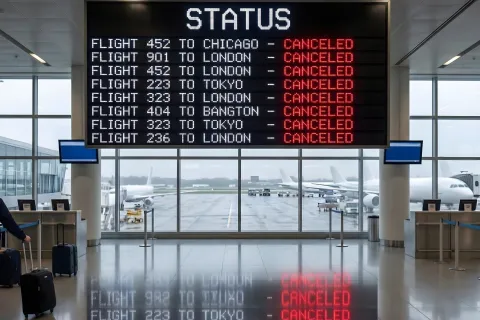
JAKARTA, Indonesia - Garuda, AirAsia, Malaysia Airlines, Lion Air, and Batik Air face over 200 flight cancellations across Indonesia, Malaysia, and Hong Kong, stranding travelers on domestic and international routes.
EVA Air Captain Suspended After Cockpit Assault
LOS ANGELES — A Taiwan-based carrier opened an investigation after its Boeing 777 captain allegedly assaulted a Malaysian first officer who warned about excessive taxiing speed.

MH370 Search Relaunches Over a Decade After Vanishing
KUALA LUMPUR, Malaysia — Malaysia has restarted the hunt for Flight 370, the aircraft that disappeared over the Indian Ocean in 2014, reigniting hope for answers in aviation's most baffling mystery.

MH370 hunt resumes in pinpoint zone 11 years on
Kuala Lumpur, Malaysia — Fresh seabed mapping and advanced drones will guide a 55-day mission to find vanished Flight MH370 in the southern Indian Ocean.

About the Author

Wilson Montgomery
Wilson Montgomery is a British-born travel writer who has carved a niche for himself with his compelling narratives about African travel and safari experiences.